
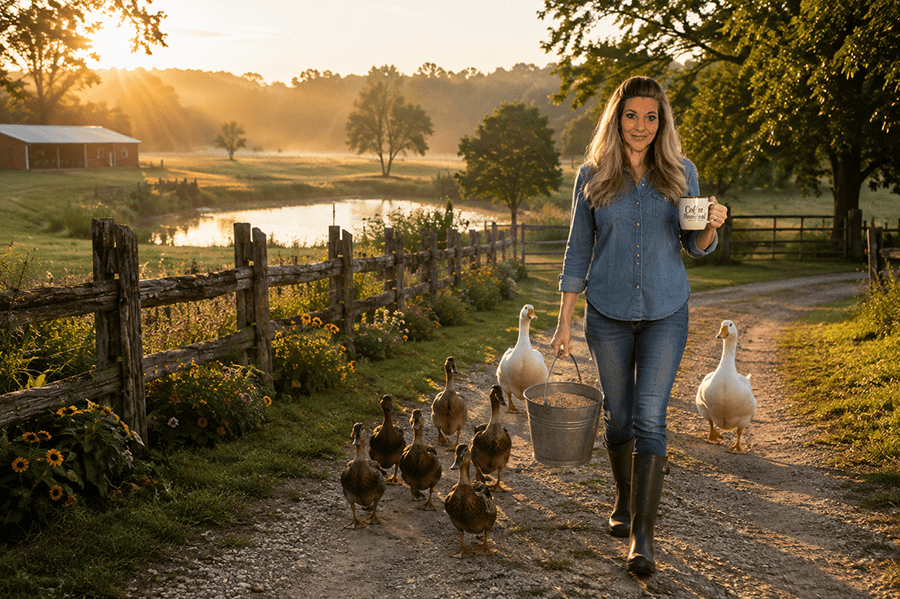
Raising Ducklings From the Shipping Box to Happy, Healthy Ducks
There are few things quite as exciting—or quite as noisy—as opening a box from the post office and finding a pile of tiny ducklings peeping up at you.
Mail-order ducklings arrive looking impossibly small, soft, and innocent. Then you give them water.
Within approximately eleven seconds, you discover one of the great truths of homesteading:
Ducklings can turn clean water, fresh bedding, and a perfectly tidy brooder into a swamp faster than seems physically possible.
I’ve raised ducklings using a simple setup that doesn’t require an expensive brooder: a small plastic kiddie pool, pine shavings, a safe heat source, and a piece of cardboard under their food and water. It works well, it’s easy to clean, and the pool helps contain at least some of the mess.
Here’s how to get those little mail-order babies safely through their first weeks and start teaching them the routine they’ll follow as grown ducks.
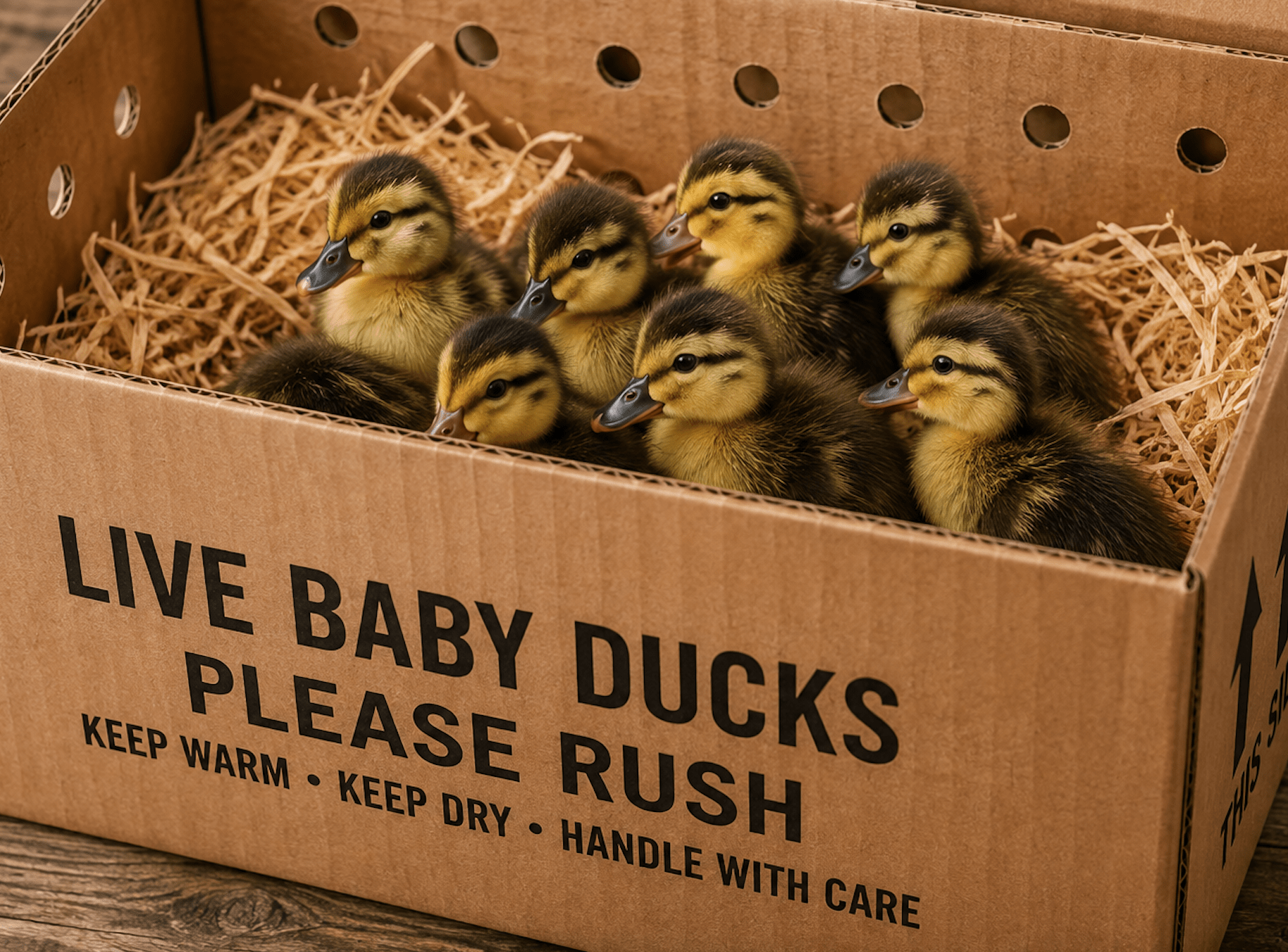
Finding a reliable hatchery can be quite the adventure, but with a bit of research, you can discover hatcheries that provide healthy birds, prompt shipping, and outstanding customer service. Personally, I've had fantastic experiences with Metzer Farms for waterfowl and McMurray Hatchery for chickens.
Table of Contents
Before Your Ducklings Arrive!
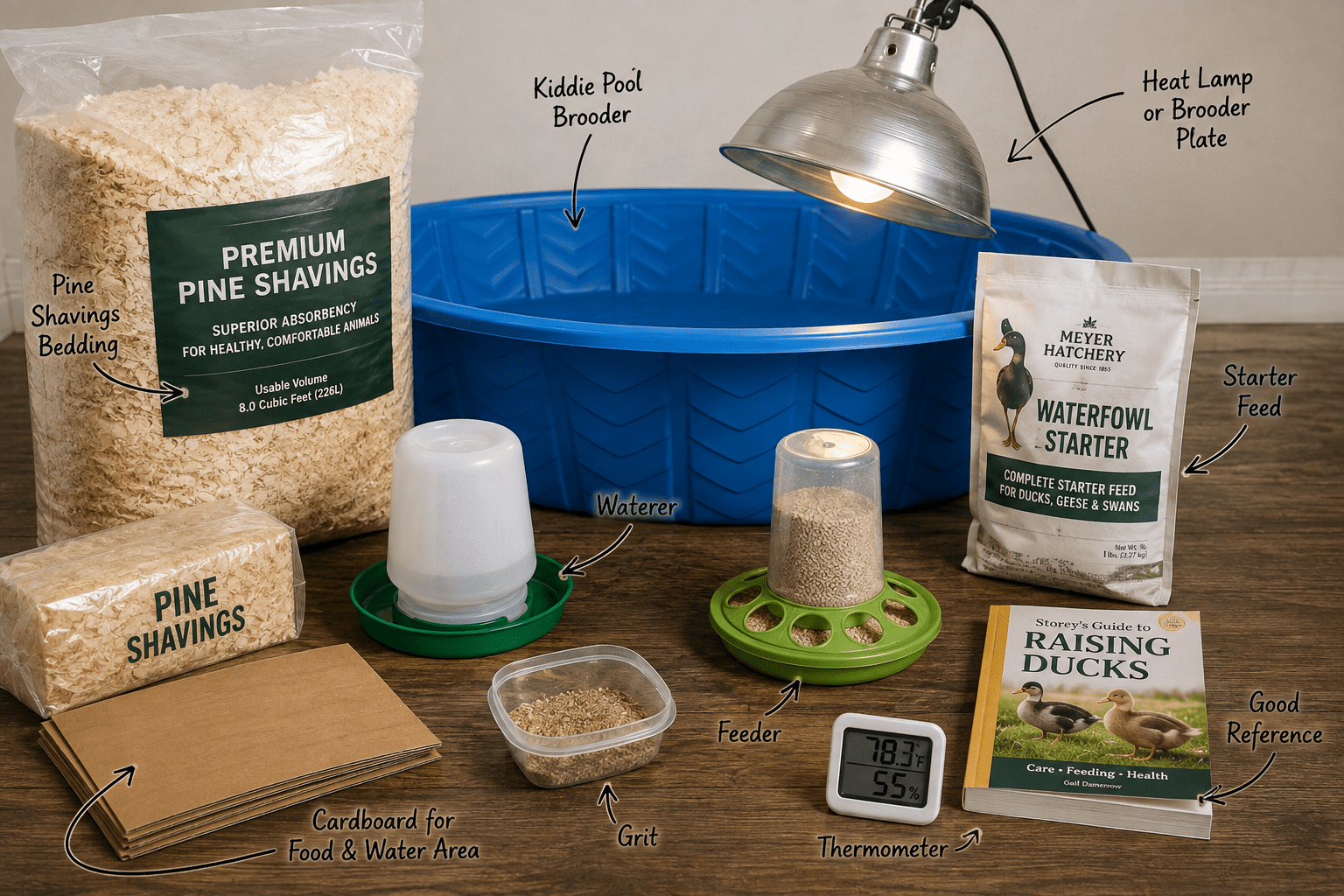
What you need to have before your new babies arrive?
If you’re ordering ducklings through the mail, have everything ready before the post office calls.
Mail-order poultry is typically shipped shortly after hatching. By the time your ducklings arrive, they’ve already had quite an adventure for such little creatures.
You want them to go directly from the shipping box into a warm, safe brooder with food and water waiting.
Have ready:
- A kiddie pool or another secure brooder
- Pine shavings
- Cardboard or another textured, disposable surface for the feeding area
- Duckling-appropriate feed
- Chick grit when appropriate for their diet
- A safe waterer
- A feeder
- A brooder heat plate or another properly secured heat source
- Extra bedding—and I mean extra bedding
Ducklings use a remarkable amount of it.
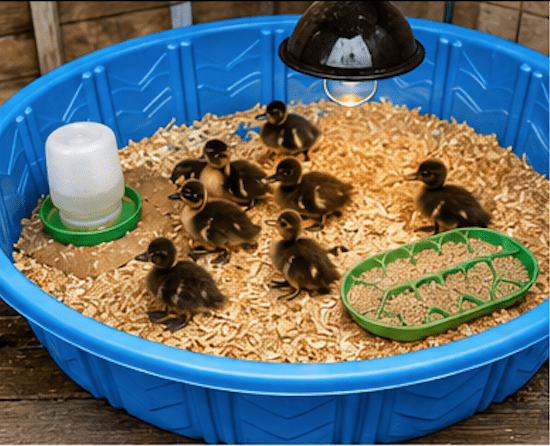
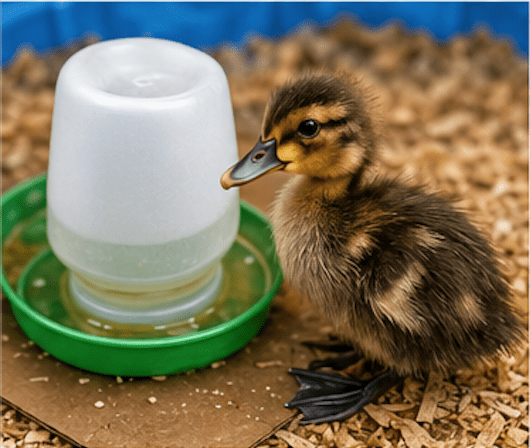
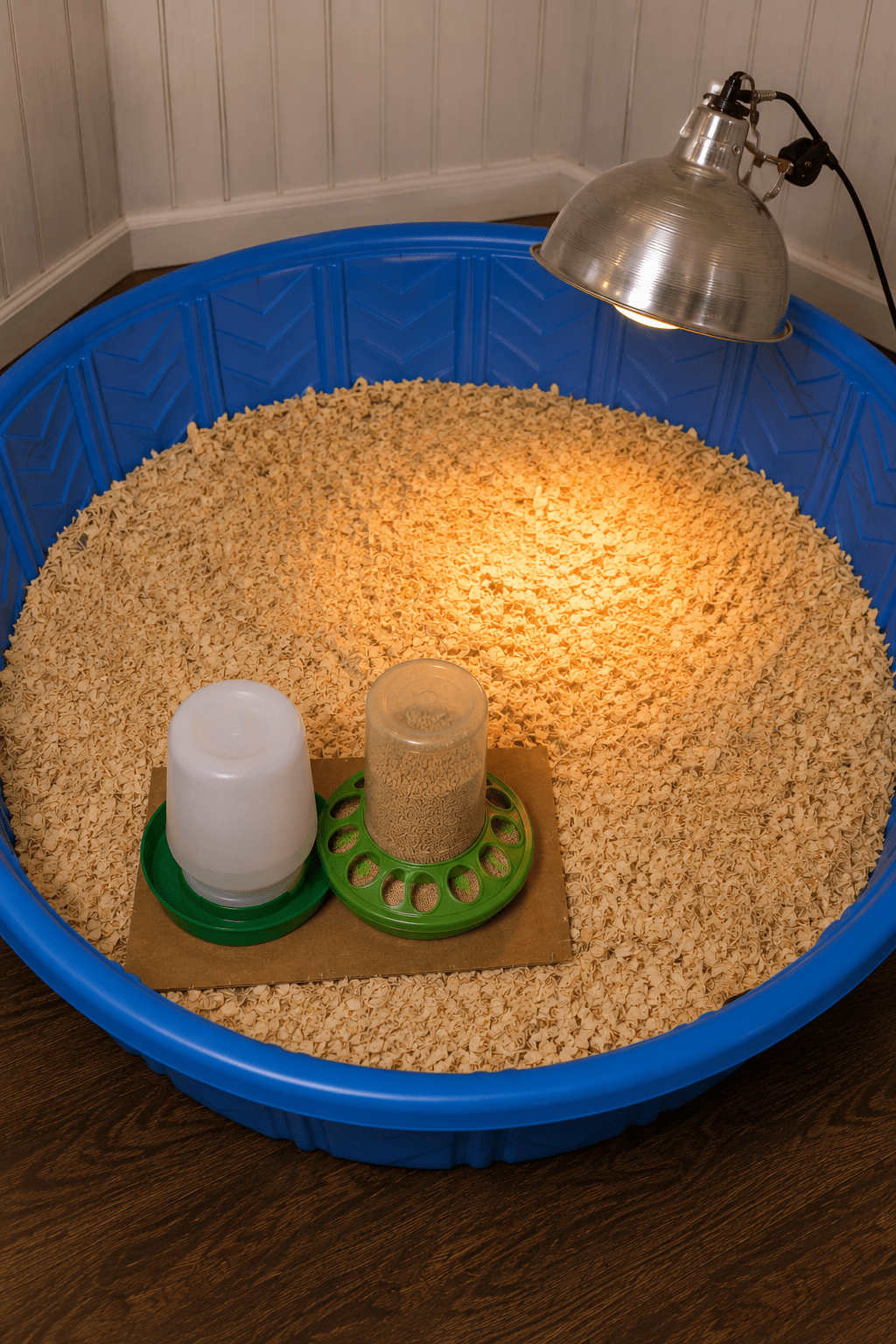
My Kiddie-Pool Duckling Brooder
One of my favorite inexpensive brooders is a small plastic kiddie pool.
The solid sides help contain bedding and spilled water, while the pool itself is easy to scrub and disinfect between batches of birds.
Cover the bottom generously with pine shavings.
Avoid cedar shavings, which aren’t a good bedding choice for young poultry. You also want to avoid slick surfaces such as bare plastic or newspaper.
This is especially important with ducklings.
Slippery Floors Can Cause Leg Problems
Young ducklings need a surface that gives their feet good traction.
A slick floor—especially one that becomes slippery when wet—can contribute to leg problems, including splayed or spraddle legs, where a duckling’s legs slide outward instead of staying properly positioned underneath its body.
And if you’ve met a duckling, you already know that everything gets wet.
That’s why I use plenty of pine shavings throughout the brooder and put cardboard underneath the food and water area.
The cardboard gives their feet something to grip while also catching some of the inevitable mess. When it becomes soaked and dirty, I simply replace it.
You can also use other sturdy, textured, non-slip materials that are safe for ducklings. Whatever you choose, check it frequently. A surface that provides traction while dry may become surprisingly slick once the ducklings have splashed water all over it.
Water: Ducklings Need It—and They Will Put It Everywhere
Ducks need access to clean drinking water whenever they have feed available.
Unlike chicks, ducklings use water while eating to help them swallow and clear their bills and nostrils. Their water should be deep enough that they can dip their entire bill and clean their nostrils, while being arranged so tiny ducklings cannot simply climb into the waterer and become chilled.
This is one of the balancing acts of raising ducks:
They need water. They love water. They should have water. They also cannot be trusted with water.
At least not yet.
Expect to change their drinking water several times a day when necessary. Keeping the waterer on that cardboard feeding area makes cleanup much easier.
Can Baby Ducklings Swim?
Yes—but there’s an important difference between a duckling being able to paddle and a duckling being ready to live like an adult waterproof duck.
Very young ducklings do not yet have the fully developed waterproof feathering of adult ducks. A duckling raised by its mother also benefits from contact with her preen oils. Mail-order ducklings being brooder-raised don’t have Mama Duck helping them out.
So I treat early swimming as short, closely supervised bath time, not unlimited access to a swimming pool.
During the First Week
I generally concentrate on getting newly arrived ducklings warm, hydrated, eating and settled before worrying about swimming.
Once they’re strong and active, they can have a very brief supervised paddle in comfortably warm, shallow water.
A few minutes is plenty.
Watch them constantly.
The moment they begin looking tired, waterlogged, chilled, or less active, swimming time is over.
Take them out, gently towel them if necessary, and put them straight back into their warm brooder.
As They Grow
As the ducklings become larger and stronger, their supervised water time can gradually increase.
A simple guideline is:
Weeks 1–2: Very short, closely supervised paddles in warm, shallow water.
Weeks 3–4: Gradually longer supervised sessions if they’re active, warm and doing well.
Weeks 5–8: Their juvenile feathers increasingly replace the baby down, and water resistance improves. Continue monitoring them until they’re fully feathered.
Feather development varies by breed and individual bird, so I don’t rely entirely on the calendar.
Look at the duckling, not just its birthday.
Until they’re well feathered and able to maintain their body temperature, don’t leave them unattended with a pool deep enough to swim in.
And give them an easy way to get out. A tired duckling shouldn’t have to struggle up a slick, steep side.
What Should You Feed Ducklings?
Whenever possible, I like to use a commercial starter feed formulated for ducklings or other waterfowl.
If that’s unavailable, an appropriate unmedicated chick starter can sometimes be used, but ducklings have nutritional needs that differ from chicks—one of the most important being NIACIN.
Ducklings grow incredibly quickly, and adequate niacin is important for healthy leg development.
If you’re using a feed that isn’t specifically formulated for waterfowl, check the manufacturer’s nutritional information rather than assuming it’s suitable. Depending on the ration, supplemental niacin may be appropriate; brewer’s yeast or other supplements are sometimes used, but the amount should be based on the actual feed and veterinary or poultry-nutrition guidance rather than guesswork.
I also avoid feeding lots of treats to babies.
A good complete starter ration should be doing most of the nutritional heavy lifting while they’re growing.
Once you introduce foods besides their complete commercial feed—greens, vegetables, insects or other treats—make sure they have access to appropriately sized poultry grit if they need it to grind those foods.
And remember: Feed and drinking water go together. Don’t give ducklings dry feed without access to water.
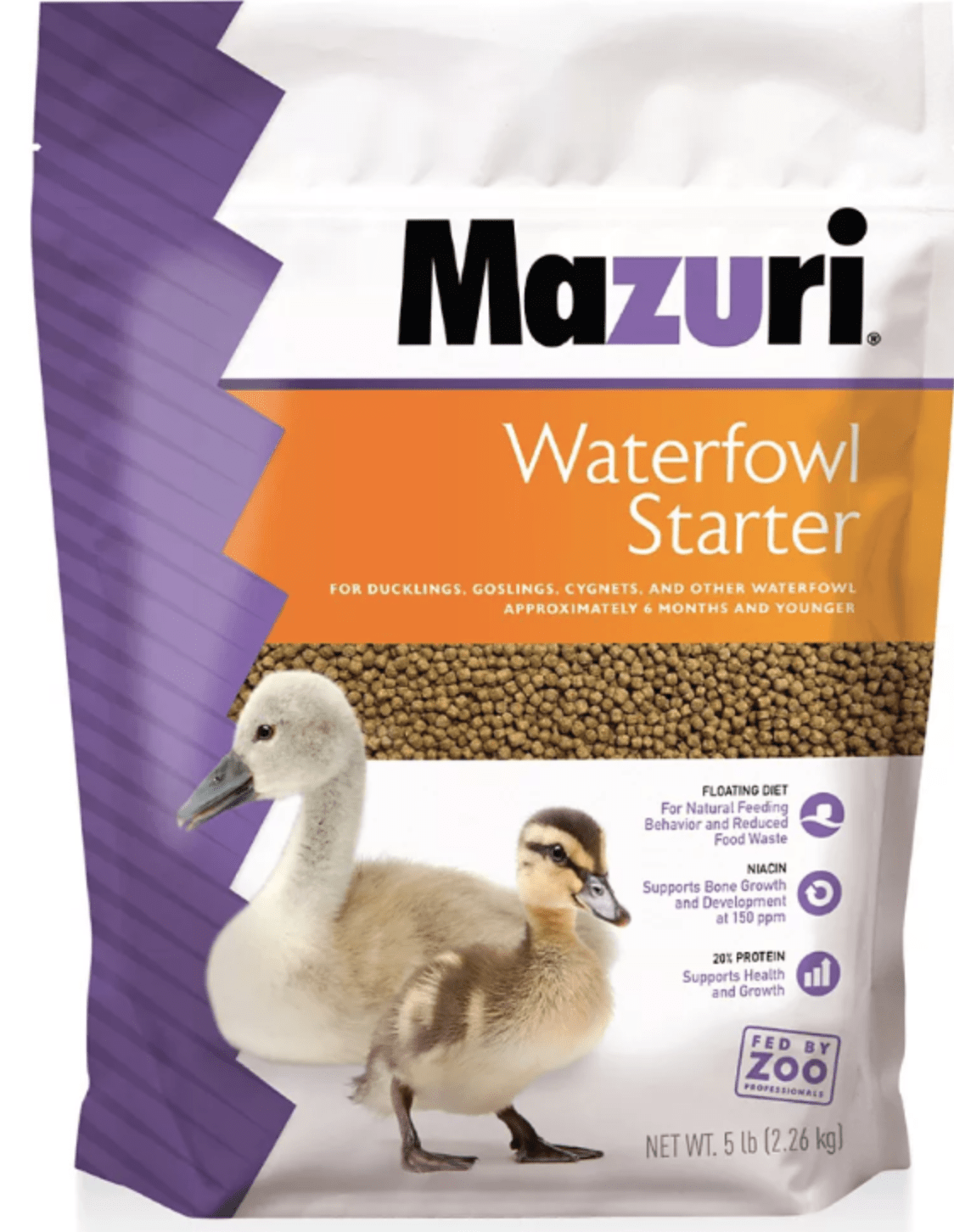
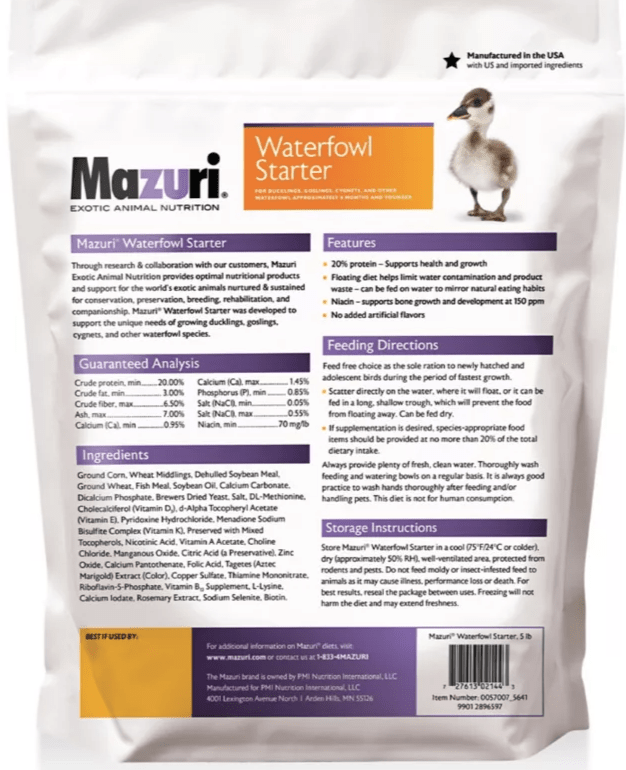
There are a lot of options when it comes to duckling starter, but Do Not use Medicated Chick feed, and look for a crumble not a pellet for young birds. Also make sure that the feed includes NIACIN or that you are feeding a Niacin supplement. I like the Mazuri starter feed from tractor supply.
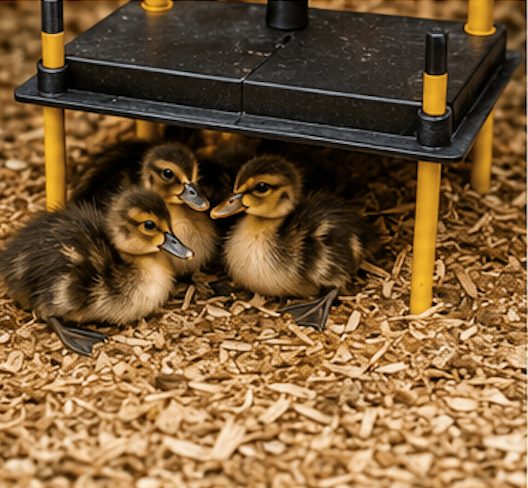
Keeping the Brooder Warm.
Mail-order ducklings need supplemental warmth when they’re young, but they also need somewhere to escape the heat.
A brooder heat plate is convenient because the ducklings can move underneath it when they’re cold and walk away when they’re comfortable.
If you’re using another heat source, make absolutely certain it is securely installed and cannot fall into bedding or create a fire hazard.
Rather than obsessing over one thermometer reading, watch your ducklings. Ducklings huddled tightly together beneath the heat may be cold. Ducklings staying as far away from the heat as possible may be too warm.
Comfortable ducklings tend to spread themselves around, eating, drinking, sleeping and investigating everything they aren’t supposed to investigate.
The Daily Battle Against Wet Bedding.
If you’ve raised chicks before, ducklings may come as something of a surprise.
Chicks make a mess. Ducklings create weather systems.
Wet bedding isn’t just unpleasant. Constantly damp conditions can contribute to chilling, odors and unhealthy living conditions.
Remove soaked bedding regularly—especially around the water—and replace it with clean, dry pine shavings.
This is another reason I like the kiddie-pool brooder. Cleanup is straightforward, and once the ducklings have moved outside, the pool can be thoroughly washed and disinfected.
As they grow, you’ll probably discover that the adorable little pool that looked enormous on arrival day suddenly looks like a studio apartment occupied by twelve teenagers.
That’s usually your sign that it’s time for more room.
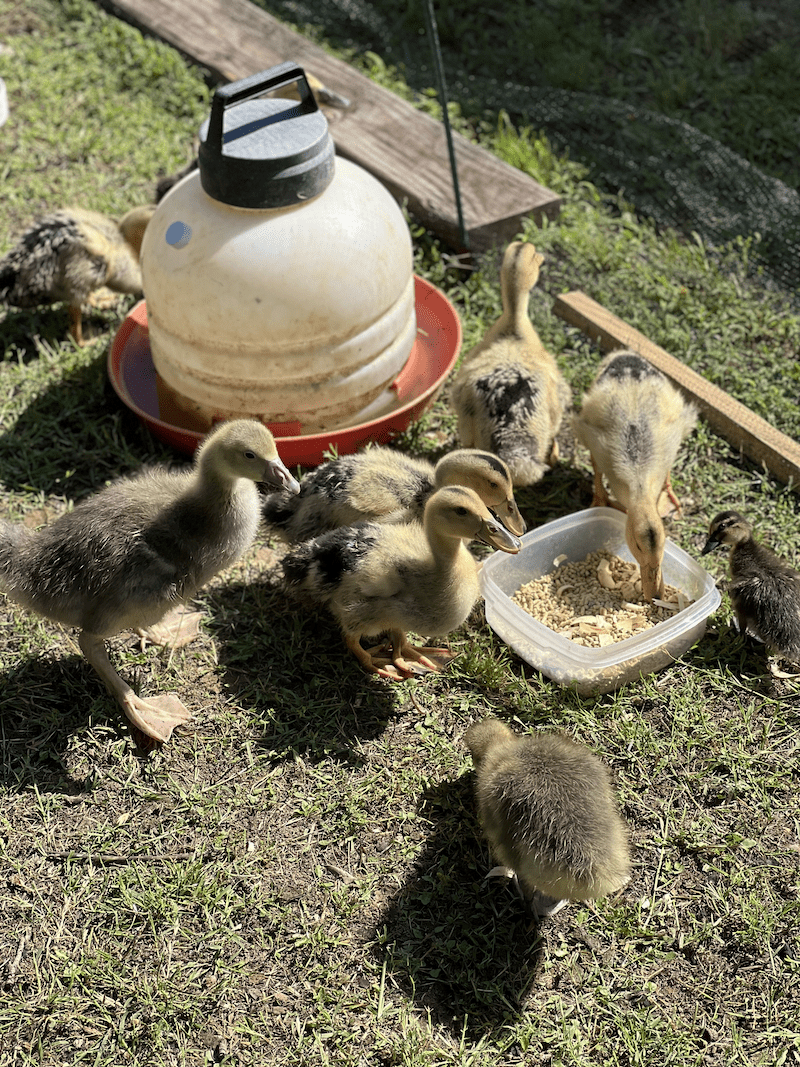
Moving Ducklings Outside
Don’t rush young ducklings from a protected indoor brooder into permanent outdoor housing. I like to keep them in a smaller secure area where when the weather is appropriate they can spend time outside of the brooder, getting some outdoor play. I start that about the begining of their 2nd -3rd week as long as it is warm outside, and limiting their acces to any open water. Before they get moved outdoors permenantly they should be appropriately feathered for the weather and gradually accustomed to outdoor temperatures.
Once they’re ready, their permanent housing should provide several things: Protection from predators. Ducks are vulnerable to dogs, coyotes, raccoons, foxes, bobcats, birds of prey and other predators. Chicken wire is useful for keeping poultry contained, but it isn’t reliable predator protection. Use sturdy construction and predator-resistant hardware cloth where appropriate.
A dry sleeping area. Ducks may enjoy spending their waking hours trying to recreate the Everglades, but they still need somewhere clean and dry to rest.
Good ventilation. Ducks produce considerable moisture, so ventilation is especially important. You want fresh air without creating a cold draft directly across sleeping birds.
Shade and weather protection. Ducks need somewhere to escape hot sun, wind and severe weather.
Secure nighttime housing. I prefer having my birds safely put away before dark rather than hoping the local wildlife has made other dinner plans.
And that brings me to one of the most useful things you can teach your ducks.
Teach Your Ducklings to Come When Called
You absolutely can train ducks to come when they’re called, and I think it’s one of the best habits to establish while they’re young.
My call is:
“Here, babies!”
I use the same words every time.
When it’s feeding time, I call:
“Here, babies!”
Then they get fed.
The birds quickly begin associating those words—and my voice—with something good.
You can start this while they’re still in the brooder. Say your chosen call immediately before putting down fresh feed. Don’t use five different phrases. Pick one and be consistent.
As they get older and begin spending time outside, continue doing exactly the same thing.
Call first.
Feed second.
Before long, you’ll say “Here, babies!” and have a flock coming toward you.
And I mean coming.
Ducks aren’t particularly subtle when they believe food is involved.
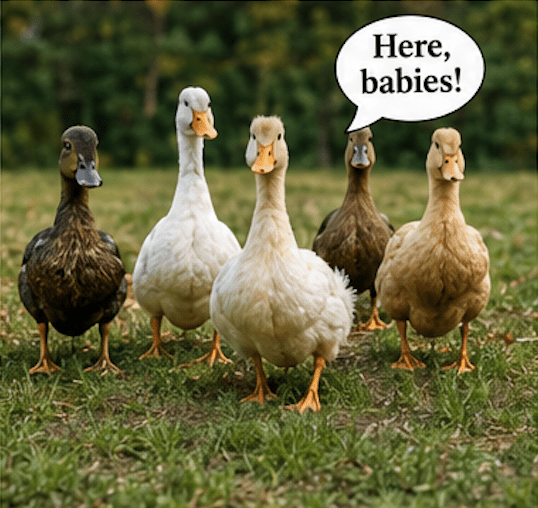
Why Recall Training Matters
This isn’t just a cute trick.
Having poultry that will come when called can make everyday homestead life considerably easier.
I use the same “Here, babies!” call with all of my birds. It becomes the universal signal that it’s time to come home.
That can help when you need to:
- Put everyone away before dark
- Move the flock to another area
- Bring birds home when bad weather is approaching
- Check that everyone is accounted for
- Separate or inspect a bird
- Get everybody safely into their enclosure
There’s something very satisfying about standing outside, calling “Here, babies!”, and watching birds start appearing from all directions.
Of course, they aren’t necessarily coming because they love me.
I choose to believe they do.
The feed bucket may have something to do with it.
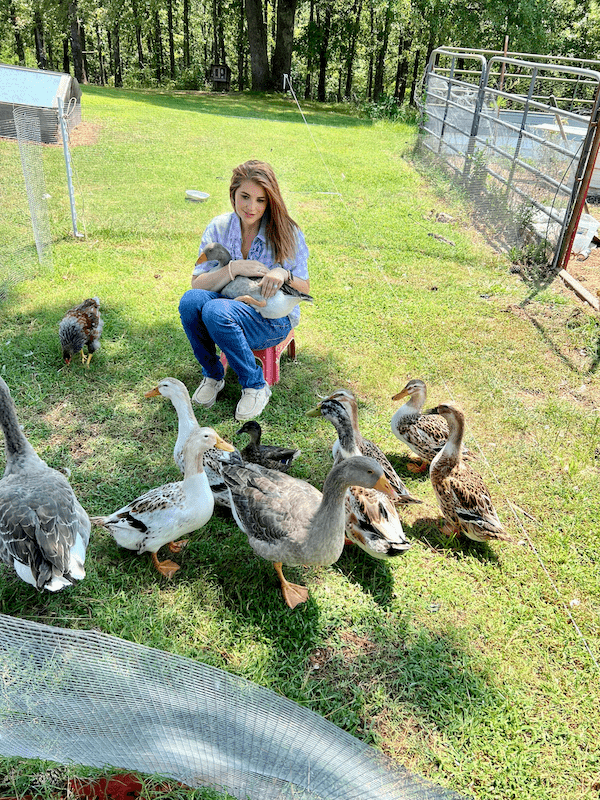
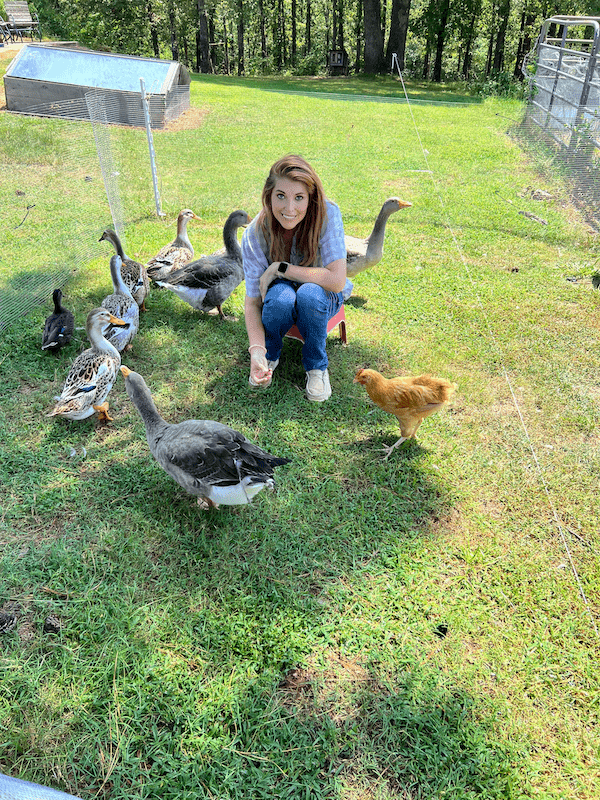
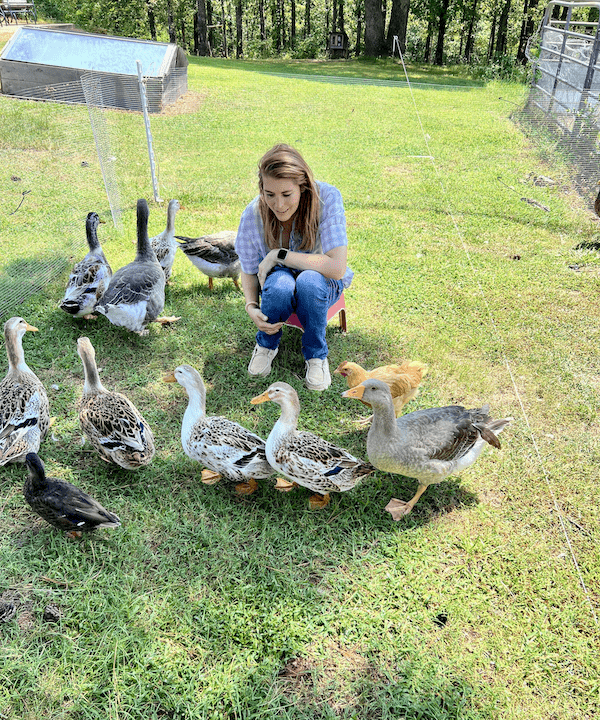
Embrace the joy that your new fluffy companions bring into your life. These intelligent little beings not only recognize your voice but also thrive on a consistent routine. Take the time to discover their unique personalities—some will be curious and playful, while others may be sweet, pushy, or a delightful mix of all these traits. Whenever I'm working in the yard, my furry friends are always eager to join in, wanting to see every little thing I do and be part of the action. Also my big drake, Pickles (cause he always gets himself in a pickle) I swear that he struts to the song "Stayin Alive"
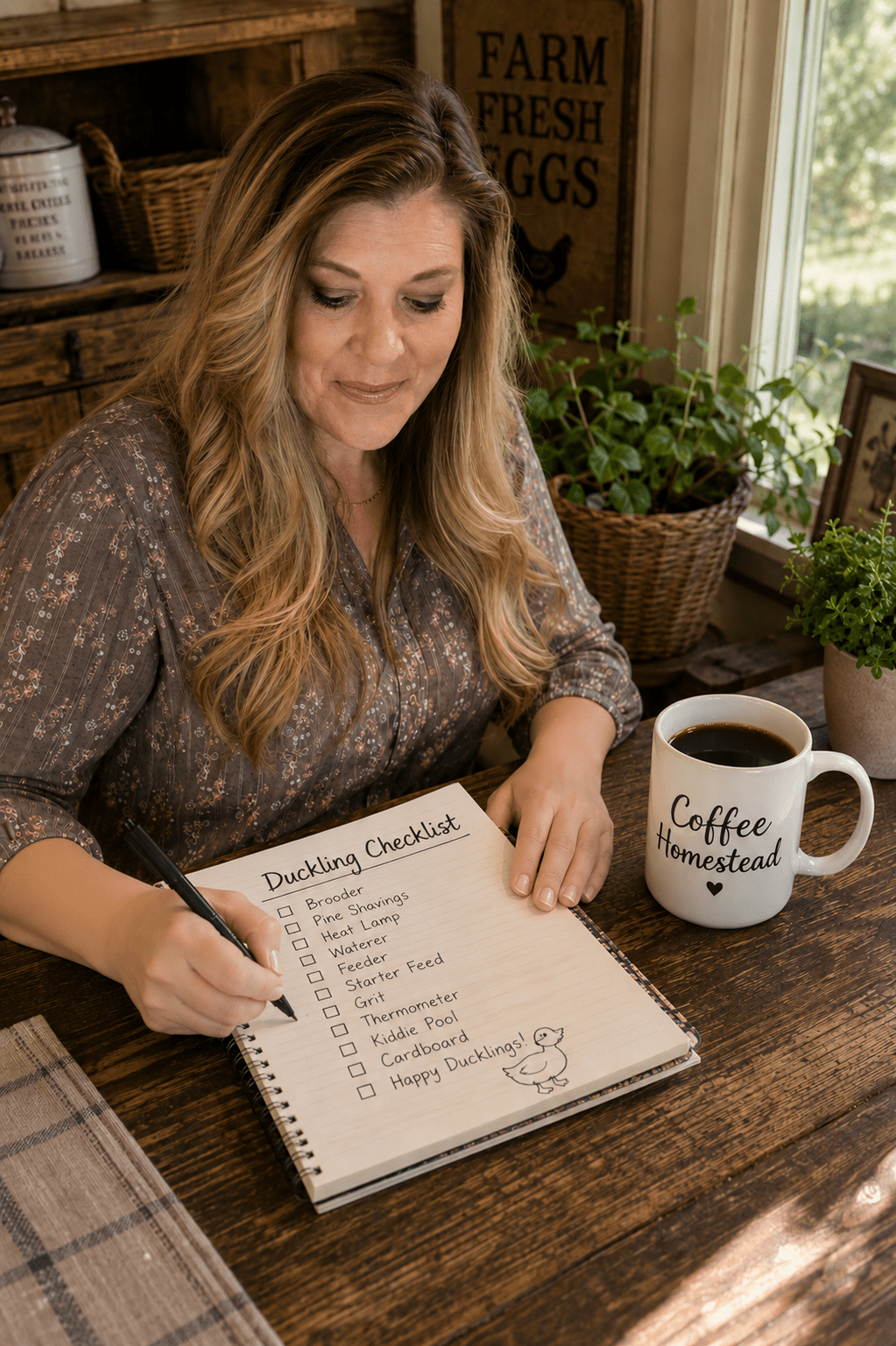
Coffee Homestead Quick Duckling Checklist
- Have the brooder completely ready before mail-order ducklings arrive.
- Use a secure brooder such as a small kiddie pool.
- Cover slick plastic with plenty of clean pine shavings.
- Provide good traction to help protect developing legs.
- Place food and water on replaceable cardboard or another non-slip surface.
- Keep drinking water clean and deep enough for ducklings to rinse their bills and nostrils.
- Never provide dry feed without drinking water.
- Feed a nutritionally complete duckling/waterfowl starter when available.
- Pay particular attention to adequate niacin in the diet.
- Keep young ducklings appropriately warm while providing room to move away from the heat.
- Keep bedding as clean and dry as possible.
- Allow only short, supervised swimming sessions while ducklings are young and not fully feathered.
- Make sure swimming ducklings can easily get out of the water.
- Return young ducklings to warmth immediately after swimming.
- Gradually transition them outdoors as they become properly feathered and weather permits.
- Provide dry, ventilated and predator-resistant permanent housing.
- Begin recall training while they’re babies.
- Choose one call and use it consistently before feeding.
- At Coffee Homestead, that call is “Here, babies!”
- Enjoy them. They don’t stay tiny for long.
Explore the Joys of Raising a Backyard Flock
Discover More Insightful Articles on Caring for Your Poultry


Recent Comments