
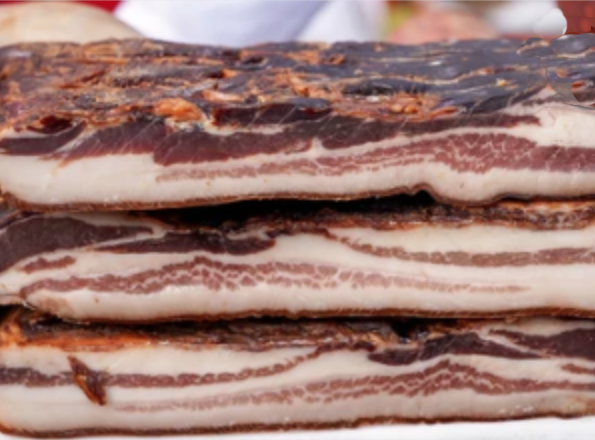
Old Fashioned, Salt and Sugar Home-Cured Bacon
Inroduction
About this Recipe
Home curing meat is a skill that has largely faded from our kitchens today. Once upon a time, it was a fundamental practice for home cooks, much like the way we rely on crock pots now. Back then, people possessed an array of impressive skills that seem almost magical today. I truly believe that these age-old techniques still hold value in our modern lives and are undeniably fascinating! For thousands of years, this was the way of preserving food long before refrigeration became a luxury. I've discovered that the flavors achieved through this method are unlike anything I've ever tasted.
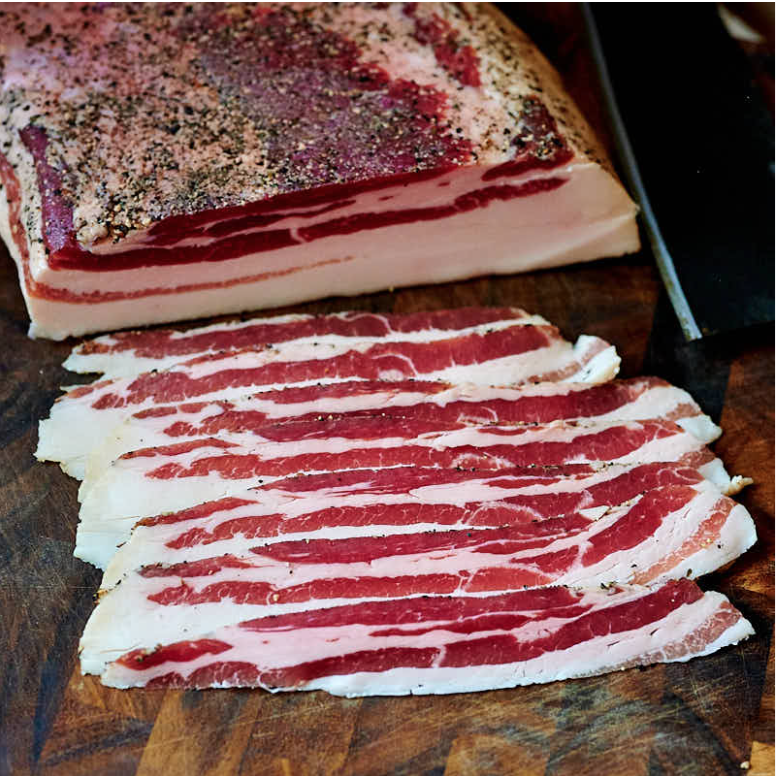
As I cooked up some bacon for my grandma, who was an incredible 101 years young, she looked at me with a smile and said, "this takes me back."
She reminisced about how food used to have a fuller, richer taste, where BLTs were crafted with "real" bacon alongside homegrown tomatoes and crisp lettuce. Every bite was bursting with authentic flavor, free from the preservatives and artificial enhancers that have become all too common today. In our quest for convenience, we’ve lost touch with what truly matters; tomatoes that travel well are not what a tomato was meant to be. The delicate flavors of this bacon are far more pronounced and will only deepen with time. It’s nothing short of transformative!
Reflecting on these cherished moments, I realize that food is more than just nourishment; it’s a bridge connecting us to our past. It reminds us of simpler times when meals were prepared with care and ingredients were sourced from our own gardens. Let’s honor the flavors of yesteryear while creating new memories in the kitchen today. So gather your loved ones, fire up the stove, and let every dish you prepare be a celebration of love and connection!
Food Preservation Safety
Curing and preserving meat brings a vital concern: toxic botulism. While often linked to improper canning, it can also occur with incorrectly cured meat. To combat this risk, commercially preserved meats use sodium nitrite, or pink curing salt, which acts as a preservative and gives bacon its appealing red color. However, excessive sodium nitrite can be toxic and is associated with health issues like migraines and cancer. Some organic brands claim to be uncured by using celery juice, but be cautious—celery juice may contain higher levels of natural sodium nitrite than pink salt. Understanding food preservation helps you make safer choices in the kitchen, ensuring delicious and safe meals for your loved ones.
Health Benefits of Home-Cured Bacon
While sodium nitrite is often a concern, especially when it interacts with high heat and proteins—like in fried, nitrite-cured bacon—it can form toxic nitrosamines, some of which are known carcinogens. That sounds alarming, doesn't it? In large industrial settings, sodium nitrite plays a crucial role in ensuring meat is safe from botulism and harmful bacteria, given the complexity of various processes and handlers involved. However, here’s the exciting part: as a home cook, you have the power to control these variables much more effectively. You can achieve the same safety without the need for nitrites. Plus, the flavor of your homemade bacon will be far superior to anything you can buy pre-packaged. I promise you won’t be disappointed!
Food Preservation Safety
Curing is a time-honored method that removes moisture from food to extend its shelf life. We will apply this technique to your pork belly, turning it into savory bacon. Through dry salt curing, we combat bacteria effectively. As the bacon rests, its surface dries, creating an environment that prevents new bacterial growth. Salt stabilizes both meat and fat at room temperature, making it akin to a tender jerky. Proper storage is crucial—keep your cured meats in a cool, dry place away from sunlight to enhance flavor and freshness. A little knowledge goes a long way in ensuring the safety and quality of your preserved foods. Enjoy the art of curing!
Local Farm Raised Pork
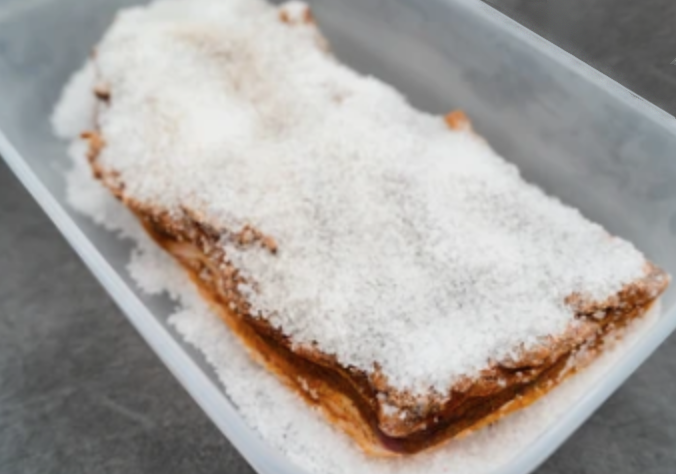
If possible try to find a local farmer or independent processor that you can purchase a farm-raised pork belly. The Coffee Homestead kids are in FFA, so we have show hogs every year that we feed out and have processed locally. Pork belly is not expensive and the curing process utilizes salt and sugar as the largest part of the curing ingredients, so home-cured bacon is much more economical than store-bought.

Home Cured Bacon

I know I had you at bacon, but you don’t know bacon till you have tried home cured bacon!
- 1 Pork Belly
- 4 Cups Course Kosher Salt or Course Sea Salt
- 3 Cups Sugar in the Raw
- 1 Cup Dark Brown Sugar
- 3 tbsp Nutmeg
- 3 tbsp Smoked Paprika
- 2 tbsp Ground Black Pepper
Optional Ingredients
- 2-3 tbsp Ground Cloves
- 3 tbsp Ground Ginger
- 2 tsp Liquid Smoke
1. Rinse pork belly and pat it dry. Place in glass dish.
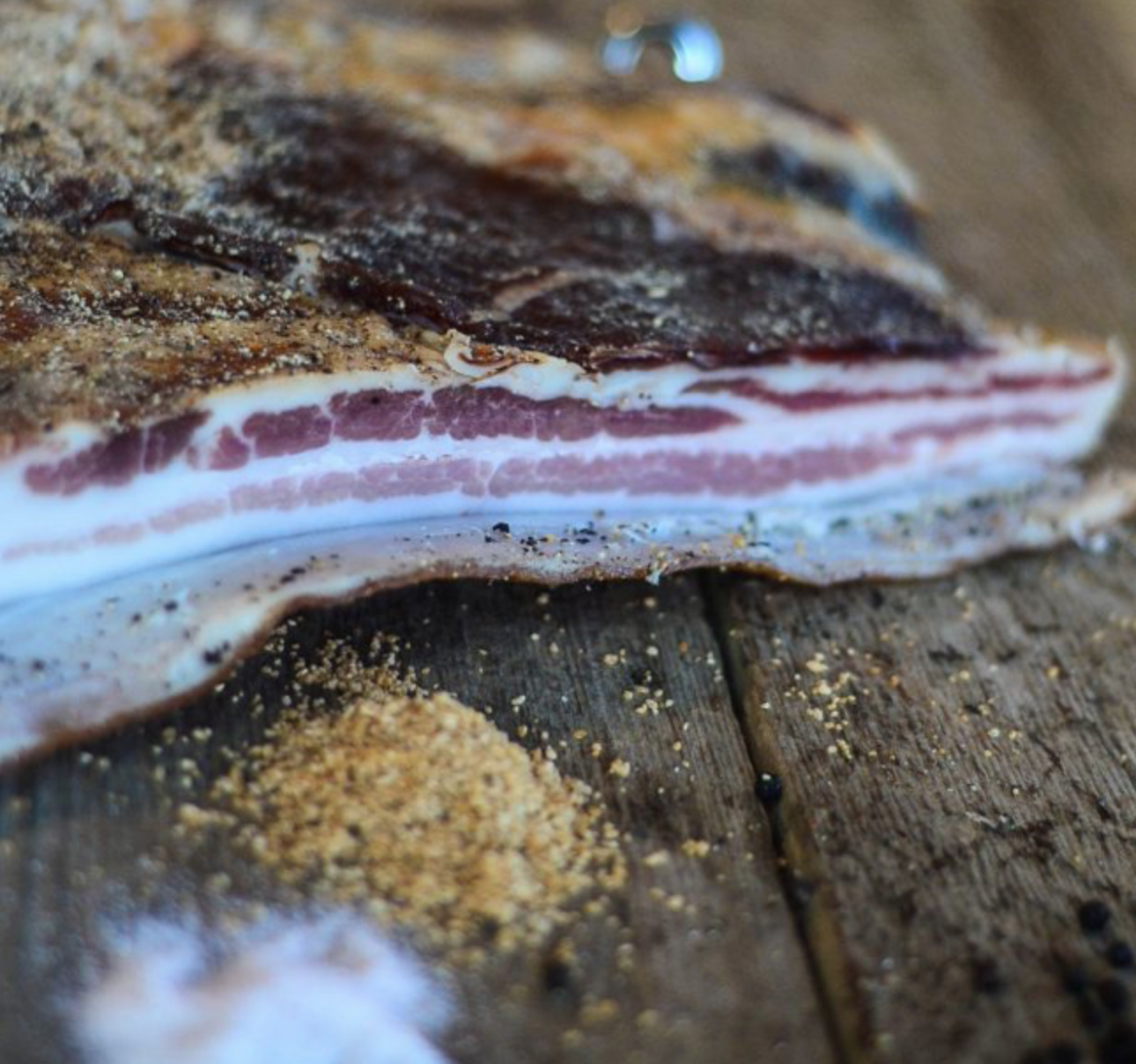
2. Mix the dry ingredients in a bowl until they are uniformly combined. Scoop out with a measuring cup enough of the dry mixture to thoroughly coat the pork belly reserve remaining salt mix to use in the next couple of days.
3. Rub the sugar and salt mixture into the flesh some more. Did I mention you need to rub that ‘ol pork belly down with the sugar and salt? Rub, rub, rub. The sides too. Make sure to get any pockets or under bits of fat – anywhere where water could accumulate. All of it, man
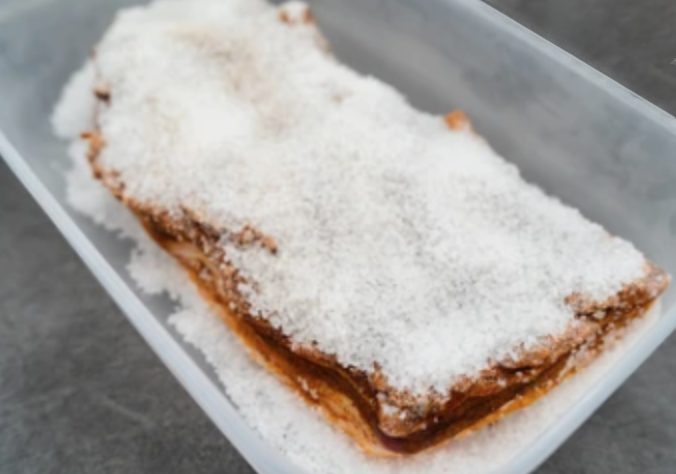
4. Stack the pork belly slab into the large glass baking dish. Stick it in the refrigerator and forget about it until the next day uncovered.
5. Next day dump the accumulated liquid out of the dish and rerub the flesh with the sugar and salt, and place it back in the refrigerator.
6. The next day, dump out any accumulated liquid and rub the sugar and salt mixture on any part of the pork belly where the salt and sugar has been completely dissolved. A thin layer will do. Repeat this process every day until liquid stops accumulating in the bin. Ours takes about 8-10 days.
7. Rinse the pork belly under water, using your fingertips to scrub off any remaining sugar and salt. Pat dry. Voila! Cured bacon
Smoking Cured Bacon
Only smoking will give the pork belly that smokey flavor most are used to. We have tried the bacon both ways smoked and “green” and as much as I love all things grilled and smoked we actually prefer the “green” bacon. So just know that if you don’t have a smoker this bacon is still and absolute winner!
If smoking, smoke over hickory or apple-wood at 175-200 degrees until meat reaches an internal temperature of 150 degrees F, or about 3 hours.
The meat should be cooked a bit on the outside, but not all the way through.
Let the bacon cool to room temperature on a wire rack over a baking sheet, tightly wrap in parchment paper, then refrigerate for at least 4 hours, preferably overnight. (This sets the flavor and texture.)
With a long, very sharp knife, slice it thin or thick, as desired. Use hard-to-slice pieces in pots of beans or soup.


Recent Comments