
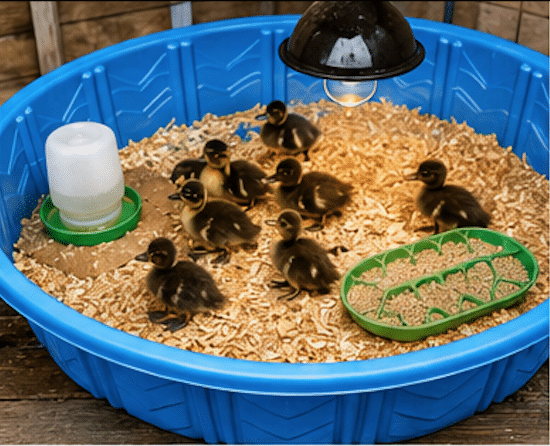
There are few things cuter than a box full of fluffy ducklings.
There are also few things capable of turning a perfectly clean brooder into a wet, muddy disaster quite as quickly.
Raising ducklings is not difficult, but it is different from raising chicks. Ducklings grow incredibly fast, drink and splash a surprising amount of water, and have nutritional needs that are easy to overlook if you treat them exactly like baby chickens.
If you are bringing home your first ducklings, this guide will walk you through the brooder setup, heat, bedding, feed, niacin, water, swimming, cleaning and the transition outdoors.
When Your Mail-Order Ducklings Arrive
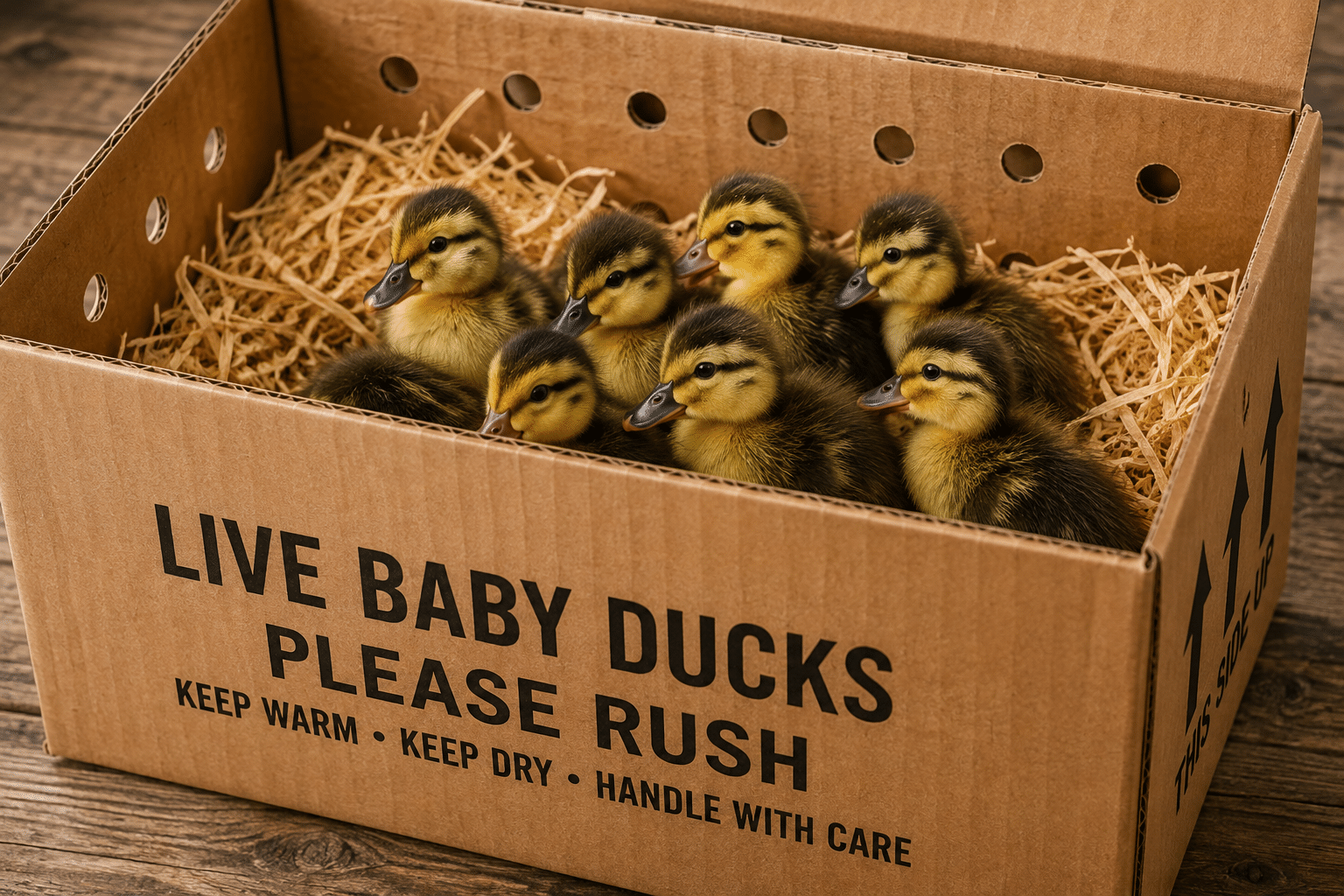
If you order ducklings through the mail, their arrival is one of those homestead moments you do not forget. You can often hear that little shipping box before you even have it completely in your hands. Just as a side note if you are looking to a mail order source I have had great luck with Metzer Farms.
Have the brooder completely ready before you bring the babies home. The bedding should be in place, the warm area ready, and fresh water and feed waiting. After shipping, the goal is to get them settled, drinking and comfortable without adding unnecessary stress.
Show each duckling where the water is as you place it in the brooder, then give the group time to settle. Watch them closely during those first hours to make sure everyone is drinking, moving normally and finding the warm area.
Start Training Them While They Are Babies
This is one of my favorite little duck-raising tricks: start teaching a recall call from the beginning.
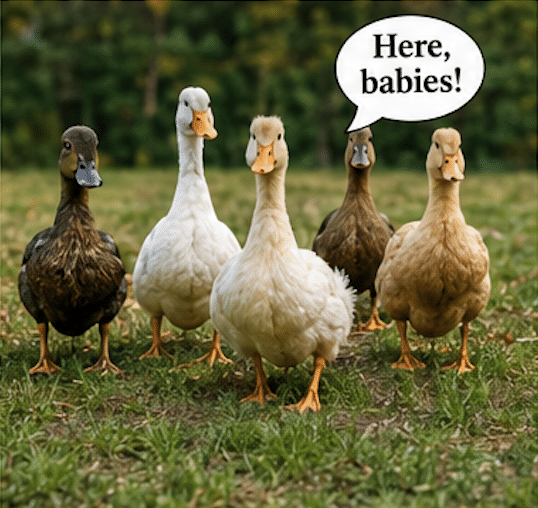
Whenever I approach with feed, treats or something the ducklings want, I use the same cheerful call: “Here, babies!” They quickly begin associating those words with something good.
It may seem silly when they are tiny and living in a kiddie pool, but that simple habit becomes surprisingly useful later when you need to call a flock across the yard, back toward their pen or away from somewhere they should not be.
Consistency is what matters. Use the same words and reward the response. Before long, “Here, babies!” can bring a whole flock waddling toward you.
What Do Ducklings Need in a Brooder?
A duckling brooder does not have to be fancy. It needs to be safe, dry enough to keep the babies comfortable, large enough for rapid growth, protected from drafts and predators, and arranged so the ducklings can move toward or away from the heat.
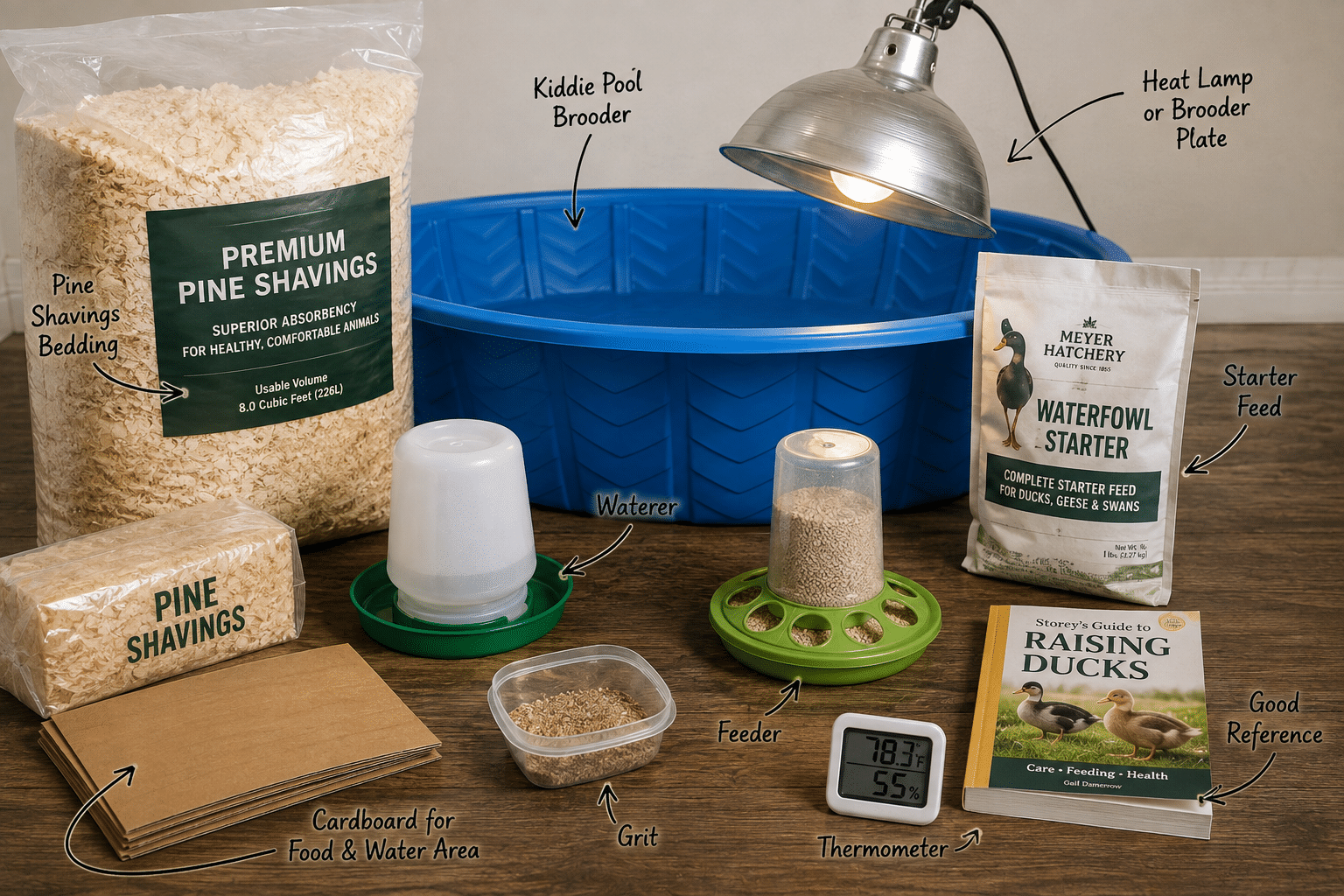
You will need a secure brooder, a safe heat source when temperatures require it, absorbent bedding, appropriate feed, a feeder, and a waterer that allows ducklings to drink and clean their nostrils without climbing into an open container and soaking the entire brooder.
Our Simple Kiddie-Pool Brooder Setup
One of my favorite inexpensive brooders for ducklings is a simple hard-sided plastic kiddie pool.
Ducklings are messy little creatures, and a kiddie pool gives them plenty of floor space while helping contain bedding, splashed water and the general chaos that comes with raising baby ducks. It is inexpensive, easy to wipe or scrub clean, and unlike a cardboard box, it does not fall apart the first time the waterer gets tipped or splashed.
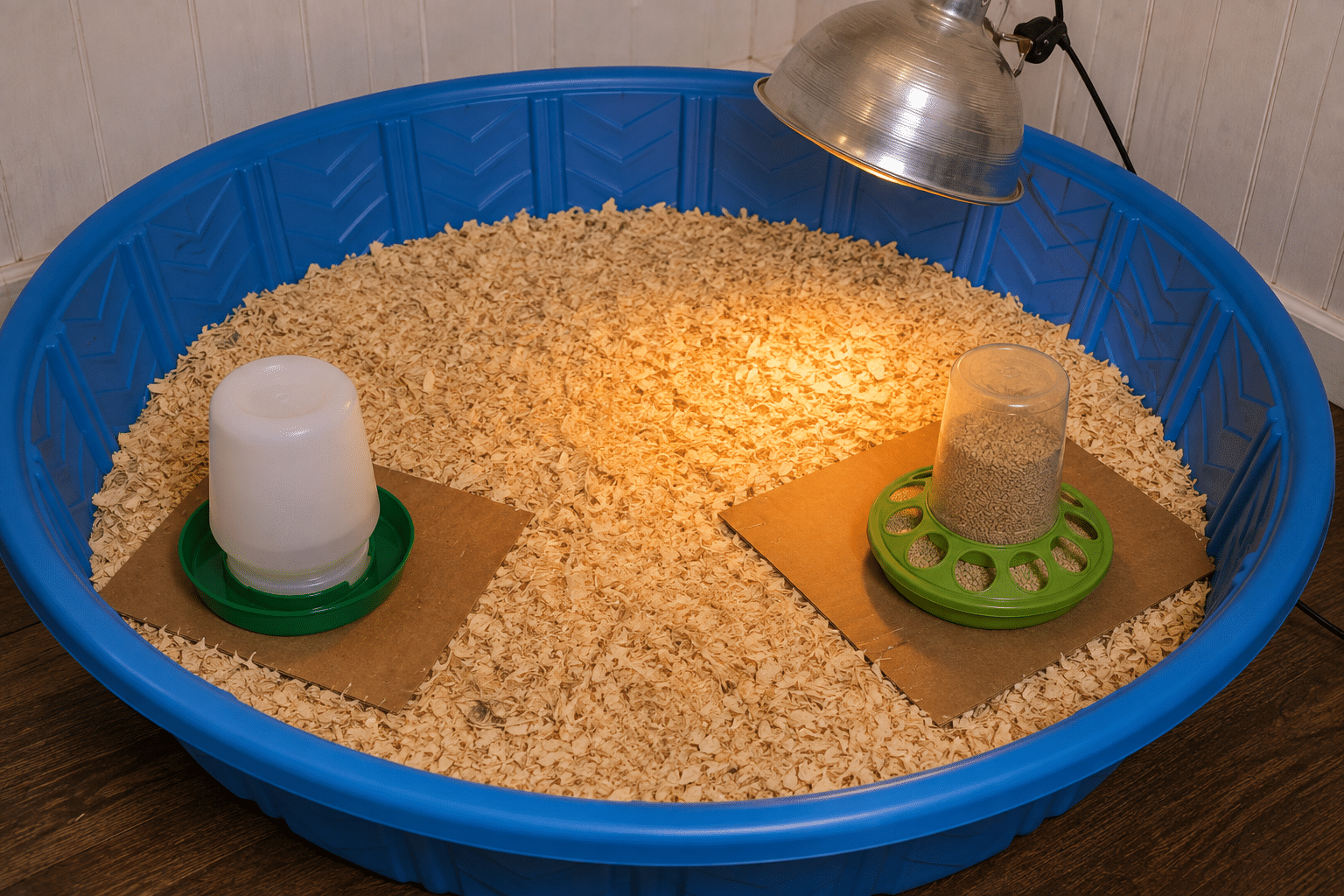
Cover the bottom with good absorbent, nonslip bedding and keep the heat source over just one portion of the pool so the ducklings can move away from the warmth whenever they want. Keep feed and water away from the warm sleeping area.
The water station is where this setup really earns its keep. In our kiddie-pool brooder, I put cardboard under the food and water area. Ducklings will splash water no matter what you do, and the cardboard gives me something I can lift out and replace when that area gets soaked instead of disturbing the entire brooder. Whatever you use around the water station, make sure the ducklings have a nonslip, wet-safe surface with good footing; slick wet surfaces are especially hard on rapidly growing little legs.
A kiddie pool is low-sided, so it is not automatically predator-proof or escape-proof. Use it inside a secure building or room and add a safe ventilated cover or enclosure when necessary. Once the ducklings become large and adventurous enough to hop or climb out, it is time to increase the height or move them to a larger brooder.
For a small batch of ducklings, this setup is hard to beat: simple, washable, inexpensive and much easier to manage when somebody inevitably decides the drinking water should also be a bathtub.
How I Set Up a Kiddie-Pool Duck Brooder
- Start with a clean, hard-sided plastic kiddie pool.
- Add a thick layer of absorbent bedding with good traction.
- Place the heat source at one end only, leaving a cooler area.
- Put feed and water away from the sleeping and heat area.
- Set the waterer over a safe catch tray or drainage platform.
- Remove soaked bedding around the water station as needed.
- Refresh the remaining bedding frequently so the surface stays reasonably dry.
- Keep the entire pool inside a secure, draft-protected and predator-proof area.
- Expand or upgrade the brooder as soon as the ducklings begin to outgrow it.
Choose a Brooder Bigger Than You Think You Need
Ducklings do not stay tiny for long.
A container that looks enormous on hatch day can become crowded surprisingly quickly. Give them enough room to eat, drink, rest and move away from the heat source.
Plan for expansion from the beginning. It is much easier than rebuilding the brooder after the ducklings have doubled in size and discovered that splashing is their favorite hobby.
How Warm Should a Duckling Brooder Be?
Newly hatched ducklings generally need supplemental warmth, but the entire brooder should not be heated evenly.
Create a warm area and a cooler area so the ducklings can choose where they are comfortable. Watch their behavior in addition to checking temperature.
Ducklings crowded tightly beneath the heat are probably cold. Ducklings staying as far away from it as possible, panting or holding their wings away from their bodies may be too warm. Comfortable ducklings move around, eat, drink and rest without constantly piling together or avoiding one end of the brooder.
As they grow and feather, gradually reduce supplemental heat according to their age, feather development and the actual ambient temperature.
Heat Plates vs. Heat Lamps
A properly sized brooder heat plate can be a convenient option because ducklings can move underneath it for warmth and leave when comfortable.
Traditional heat lamps can provide warmth, but they also introduce a serious fire risk if they fall, contact bedding or are improperly secured. If you use one, mount it with redundant secure supports and keep combustible material safely away.
Whatever heat source you choose, follow the manufacturer's instructions and make fire safety a priority.
The Best Bedding for Ducklings
Duck bedding needs to absorb moisture and provide good footing.
For our kiddie-pool brooder, I cover the bottom generously with pine shavings. They give the ducklings traction and absorb a surprising amount of moisture. The area around the water will still need frequent attention—there is simply no such thing as a completely dry duckling brooder—but keeping a good layer of clean pine shavings makes the rest of the pool much easier to manage.
Avoid slick surfaces such as newspaper by itself. Young birds need traction for healthy leg development.
Cedar shavings are generally avoided around poultry because their aromatic oils can irritate the respiratory system.
The Secret to a Cleaner Duck Brooder: Manage the Water
You are not going to keep a duckling brooder completely dry.
The realistic goal is to keep it dry enough.
Ducklings drink, dabble, shake water from their bills and walk through anything they can reach. Instead of fighting their nature, design the brooder around it.
Put the waterer over a tray, wire-covered catch pan or other safe drainage setup that keeps spilled water away from the main bedding. Make sure feet cannot become trapped and that the surface provides secure footing.
This one change can dramatically reduce how much wet bedding you replace.
Ducklings Must Be Able to Dunk Their Bills
Ducks need water deep enough to submerge their bills and clean their nostrils.
That does not mean newborn ducklings need a swimming pool in the brooder.
Use a waterer that allows them to drink freely and clean their bills while limiting their ability to climb completely into the water. As they grow, adjust the setup so they continue to have appropriate access.
What Should Ducklings Eat?
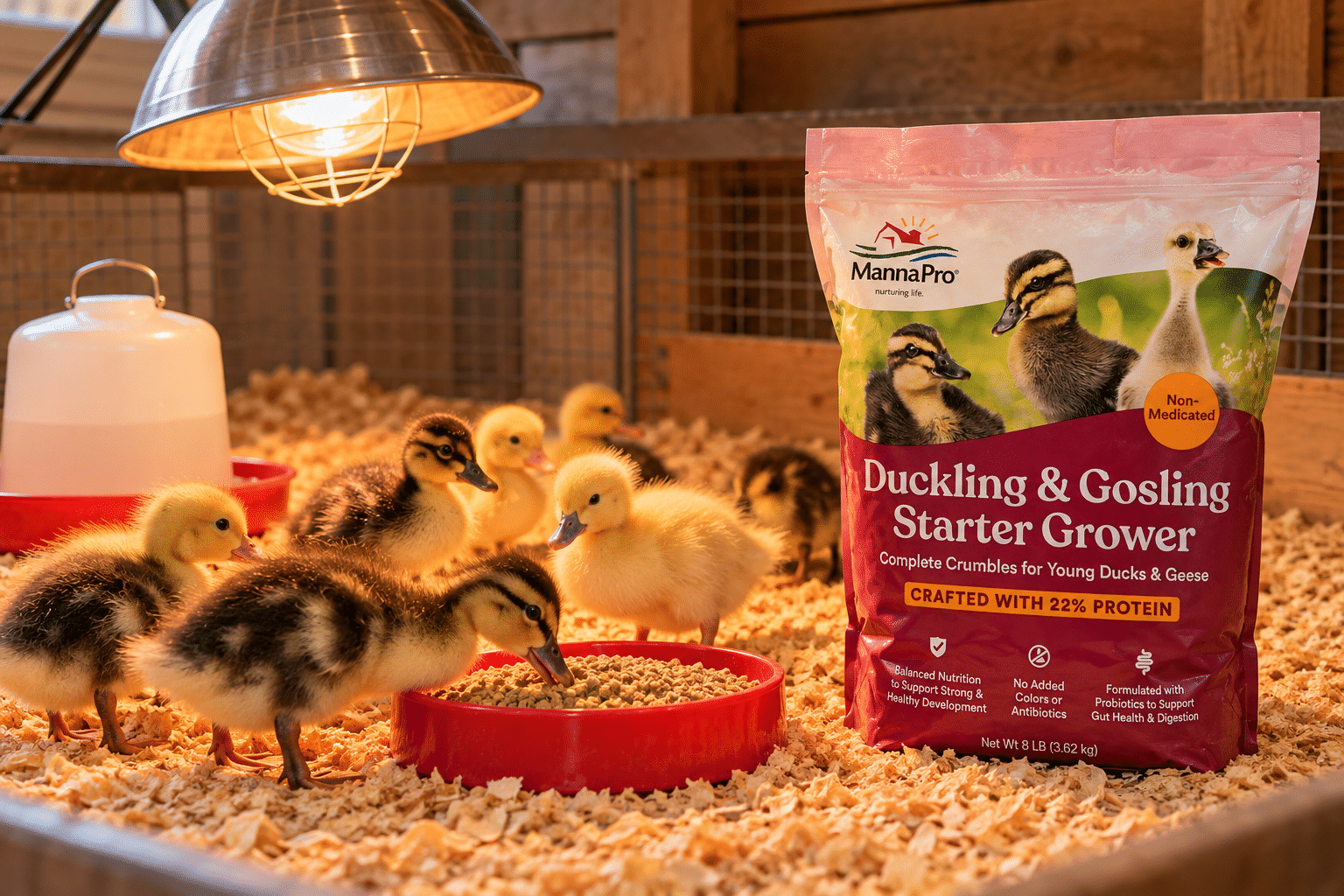
A commercially formulated waterfowl starter is an excellent choice when it is available.
If you use chick starter, make sure it is appropriate for ducklings and pay particular attention to niacin. Ducks have higher niacin requirements than chickens, and an otherwise ordinary chick-feeding program may not supply enough.
Follow current feed-manufacturer guidance for the particular product you use, because formulations differ.
Why Niacin Matters for Ducklings
Niacin, or vitamin B3, is especially important for the rapid growth and leg development of ducklings.
Inadequate niacin can contribute to weakness and leg problems. This is one of the biggest nutritional differences new duck keepers should know about.
If your chosen complete feed is specifically formulated for ducks or waterfowl, check the label before adding anything. If you are feeding a product not formulated to meet duckling needs, ask a poultry veterinarian or knowledgeable feed professional about an appropriate niacin source and amount rather than guessing at supplementation.
Do Ducklings Need Grit?
Ducklings eating only an appropriate complete commercial starter generally do not need additional grit for that feed.
Once you offer foods other than complete feed, appropriately sized poultry grit may be needed so the birds can grind those foods properly.
Treats should remain a small part of the diet. Ducklings grow fast and need the nutrition in their balanced feed.
Can Baby Ducklings Swim?
Ducklings can paddle very young, but that does not mean they should be left in deep water unattended.
Ducklings raised by a mother duck benefit from contact with her preen oils and her supervision. Brooder-raised ducklings do not have exactly the same protection early on and can become chilled or exhausted.
If you allow supervised water time, keep it brief, use comfortably warm shallow water with an easy way out, stay with them continuously, and return them to a warm, dry brooder afterward. During the first week or two, think in terms of a few minutes of warm, shallow paddling rather than a long swim. During weeks three and four, water time can gradually increase if the ducklings stay active and warm. As they move through roughly weeks five to eight and feathering and waterproofing improve, they can generally handle more time in the water—but supervision, an easy exit and attention to weather still matter.
Never leave young ducklings unattended in a tub, bucket, stock tank or other water container.
Ducklings Grow Faster Than You Expect
This deserves repeating.
The sweet little duckling that fits in your hand is going to become a much larger, much messier bird very quickly.
Increase brooder space as they grow. Raise feeders and waterers appropriately so they remain accessible without becoming bedding-filled mud bowls. Keep checking ventilation and bedding condition.
How Often Should You Clean a Duckling Brooder?
There is no useful once-a-week rule for ducklings.
Remove soaked bedding whenever you find it, especially around the water station, and add or replace clean dry bedding as needed. Clean feeders and waterers regularly.
If the brooder smells strongly, feels damp, or the ducklings are continually standing in wet bedding, it needs attention.
Good ventilation matters, but avoid creating a cold draft directly across young birds.
Watch for Problems Early
Spend a few minutes simply watching your ducklings every day.
Look for birds that are eating and drinking normally, walking well and interacting with the group.
A duckling that is persistently weak, unable to walk normally, breathing abnormally, not eating or drinking, or separating itself from the others needs prompt attention. Because young birds can decline quickly, contact a veterinarian experienced with poultry or waterfowl when illness or injury is suspected.
When Can Ducklings Move Outside?
There is no single age that works for every flock.
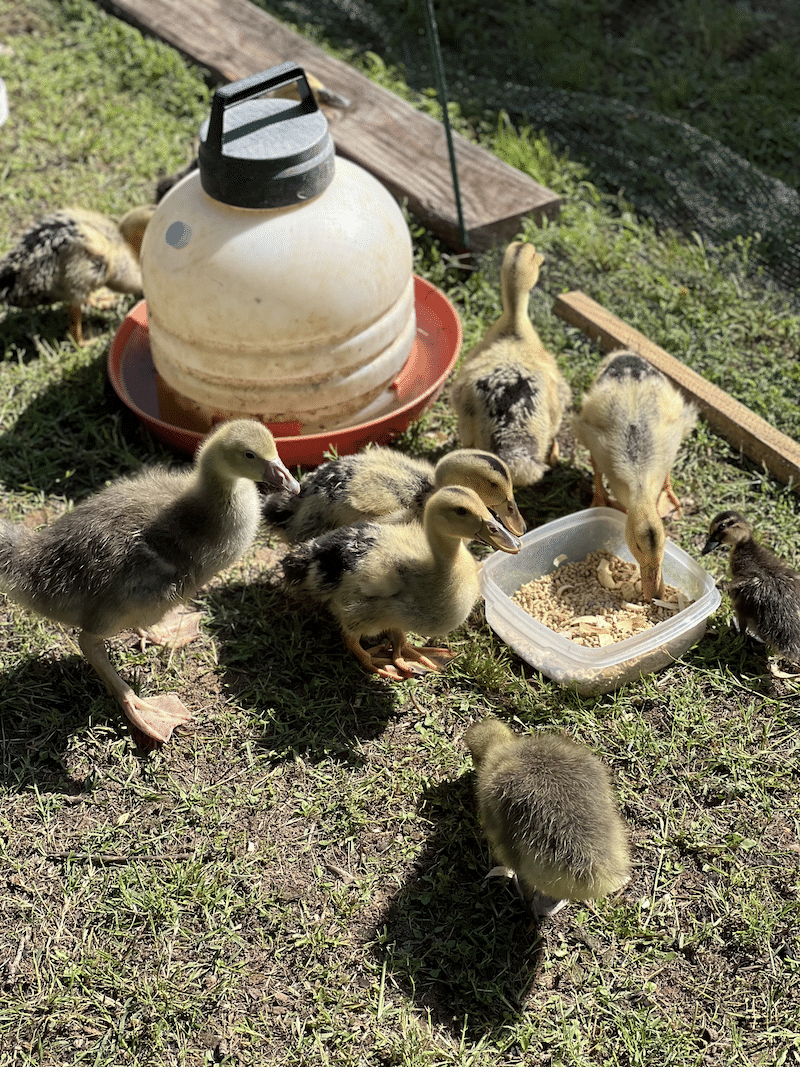
Weather, nighttime temperatures, feather development, breed, shelter and predator protection all matter. Fully feathered juveniles tolerate cool conditions much better than babies covered primarily in down.
Begin with supervised outdoor time during suitable weather, then gradually increase it. Do not move young ducks permanently outside simply because the calendar says they have reached a certain age.
Predator Protection Is Essential
Young ducks are vulnerable to many predators, and adult ducks are not predator-proof either.
The outdoor setup should protect them from threats relevant to your property, including animals that dig, climb, reach through openings or attack from above.
Chicken wire can help contain poultry but is not sufficient protection against many determined predators. Use stronger hardware cloth or appropriate welded wire where predator resistance is needed, secure doors and latches, close gaps, and consider protection against digging.
Introducing Ducklings to an Existing Flock
Do not simply drop young ducks into an established flock and hope everyone becomes friends.
Allow birds to see one another through a safe barrier first. Once the younger ducks are large enough and conditions are appropriate, begin supervised introductions with enough space for birds to move away from one another.
Watch closely for persistent bullying or injury.
A Simple Duckling Brooder Setup
- Choose a secure brooder with room for rapid growth.
- Create a warm zone and a cooler zone.
- Provide nonslip, absorbent bedding.
- Use an appropriate complete starter feed.
- Confirm that the diet meets ducklings' niacin needs.
- Provide constant clean drinking water deep enough for bill and nostril cleaning.
- Set the water station up to contain spills.
- Remove wet bedding as often as necessary.
- Increase space as the ducklings grow.
- Supervise any early swimming or water play.
- Watch behavior and leg development every day.
- Transition outdoors according to feathering and weather, not age alone.
- Use a genuinely predator-resistant outdoor enclosure.
The Biggest Difference Between Brooding Chicks and Ducklings
If you have raised chicks before, you already understand many of the basics: warmth, safe housing, clean bedding, appropriate feed and constant access to fresh water.
With ducklings, turn your attention up several notches on water management, niacin and rapid growth.
They will make a mess.
They will outgrow the first brooder.
They will somehow put water in places that seem physically impossible.
And if you plan for those things instead of expecting them to behave like chickens, raising ducklings is much easier—and a lot of fun.
From Brooder to Homestead
Those first few weeks go quickly. Before long, the little fluff balls following you around the brooder will be feathered ducks ready to explore the homestead.
Give them a safe start, good nutrition, clean water, room to grow and protection from predators, and you will have laid the foundation for a healthy flock.


Recent Comments