
If you keep both ducks and chickens—or you’ve spotted duck eggs at a farmers market—you may have wondered whether duck eggs are really that different from the chicken eggs most of us grew up eating.
The short answer is yes, but not so different that you need to rethink breakfast.
Duck eggs are generally larger, richer, and a little more substantial than chicken eggs. They also have larger yolks and can be wonderful for baking. But chicken eggs have plenty going for them too: they’re familiar, versatile, readily available, and usually less expensive.
Here at Coffee Homestead, I’m a firm believer that if something comes fresh from the barnyard, garden, or kitchen, it deserves a little experimenting. So pour yourself a cup of coffee, and let’s crack into the differences between duck eggs and chicken eggs.
Duck Eggs vs. Chicken Eggs at a Glance
| Duck Eggs | Chicken Eggs | |
|---|---|---|
| Size | Usually larger | Usually smaller |
| Shell | Often thicker and tougher | Generally thinner |
| Yolk | Larger in proportion to the egg | Smaller in proportion |
| Flavor | Richer and more pronounced | Mild and familiar |
| Egg white | Often thicker and more substantial | Lighter |
| Baking | Excellent for rich baked goods | Excellent all-purpose choice |
| Availability | Less common | Widely available |
| Price | Usually more expensive | Usually less expensive |
Individual eggs vary quite a bit depending on the breed, age, diet, and living conditions of the bird, so think of these as general differences rather than hard-and-fast rules.
Duck Eggs Are Bigger
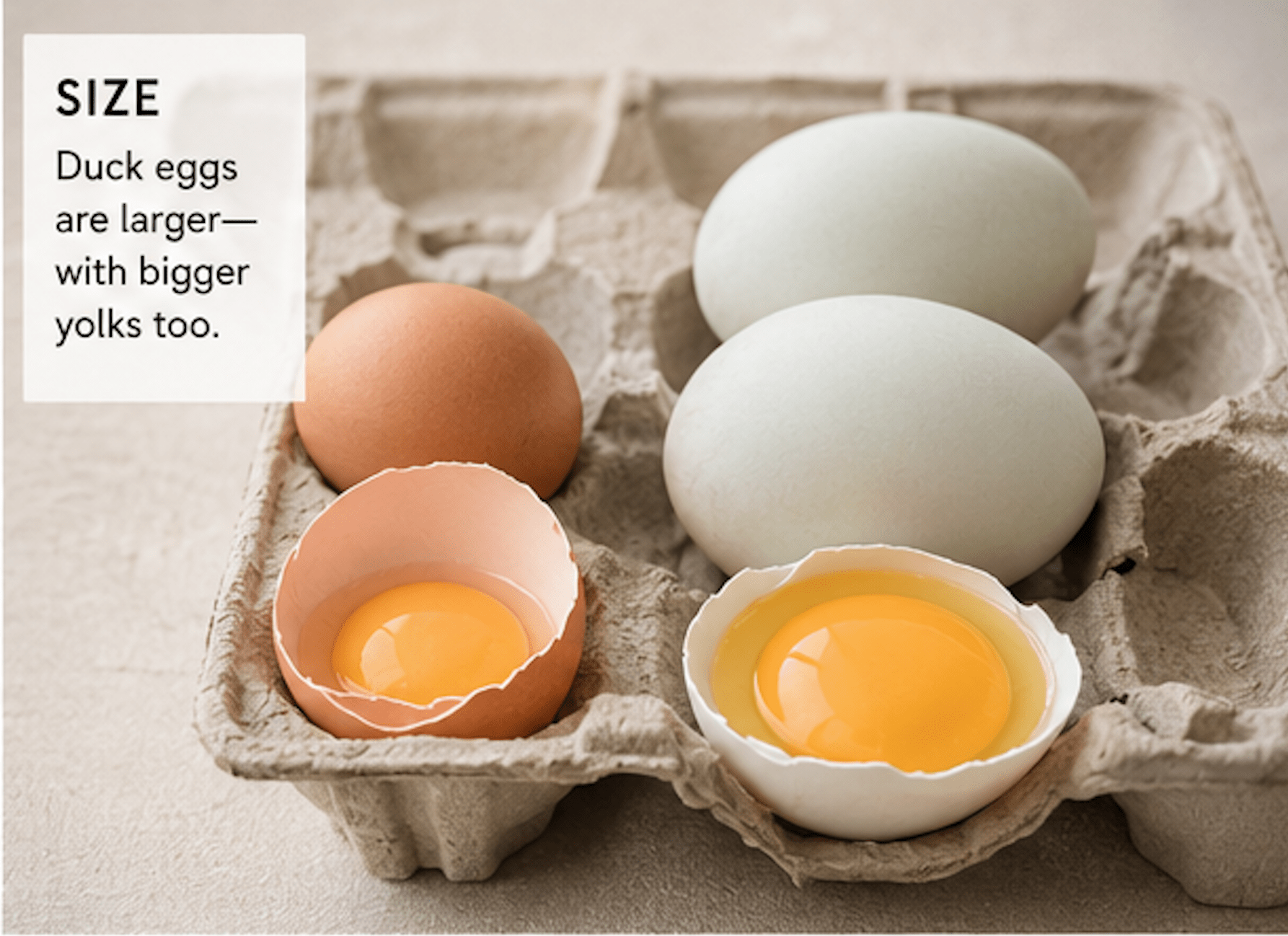
The first thing you’ll probably notice about a duck egg is its size.
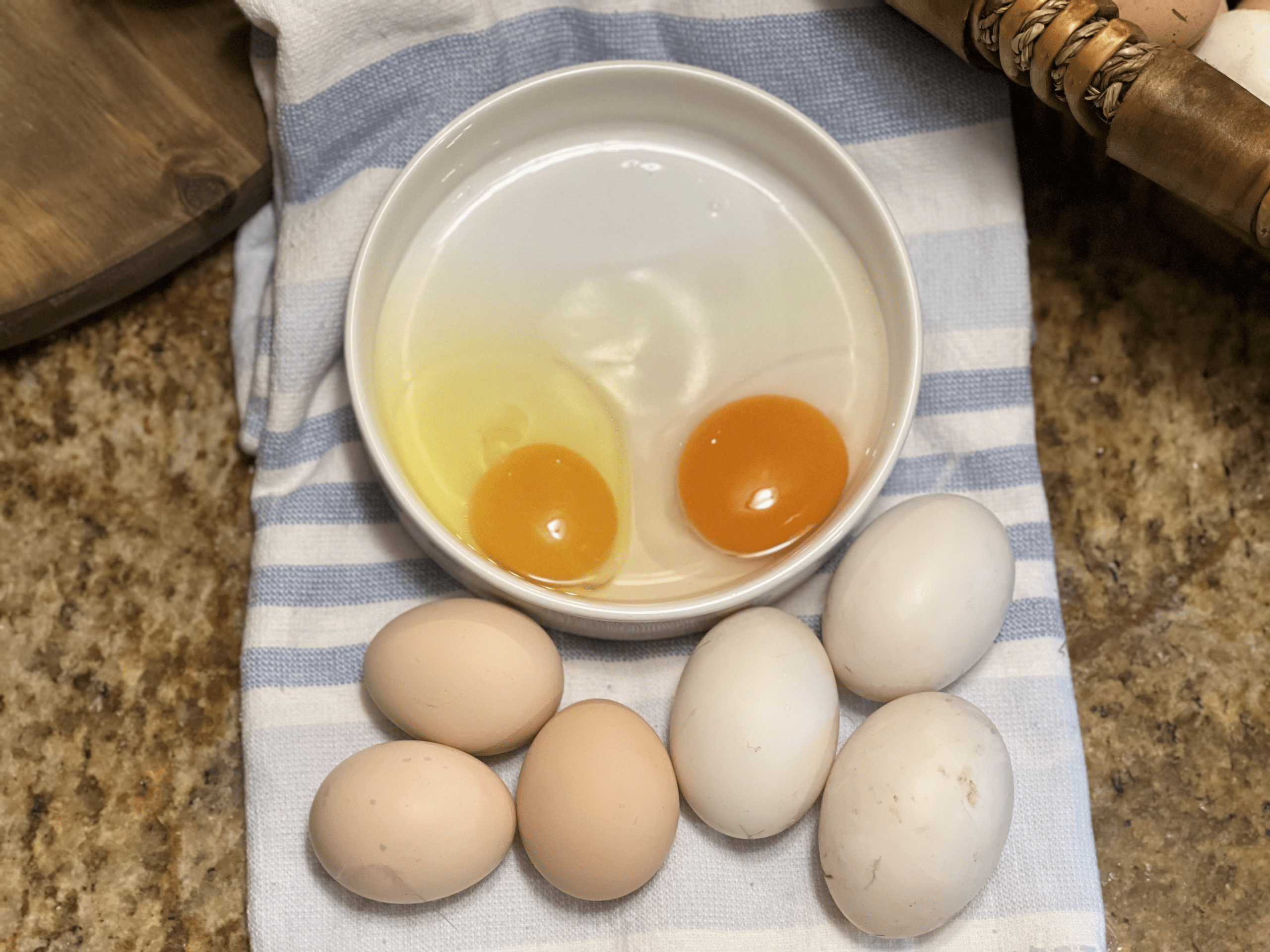
Many duck eggs are noticeably larger than the large chicken eggs sold at the grocery store. Crack one into a skillet beside a chicken egg and the difference becomes pretty obvious.
The yolk is usually larger too, which is one reason duck eggs seem especially rich.
Because egg sizes vary by breed, though, one duck egg does not automatically equal one-and-a-half chicken eggs in every recipe.
If you're baking something where precise measurements matter, the safest approach is to crack the eggs into a bowl, whisk them, and measure the amount your recipe requires.
For everyday scrambled eggs?
I wouldn't get out the measuring cup.
Some things on the homestead don't need to become a science experiment before breakfast.
What Do Duck Eggs Taste Like?
Duck eggs taste like...eggs.
That may sound obvious, but people sometimes expect a duck egg to taste dramatically different from a chicken egg.
Usually it doesn't.
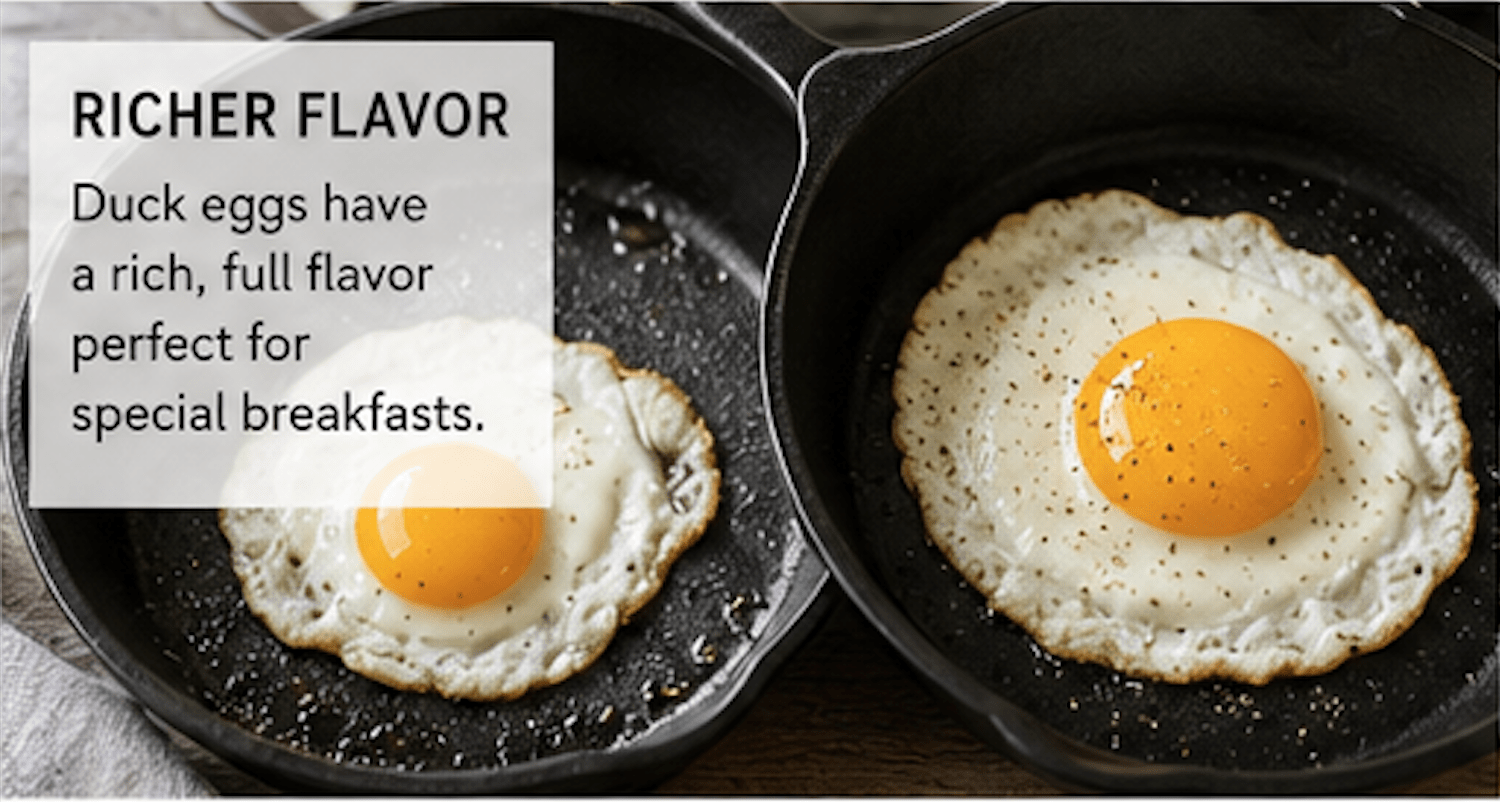
Instead, duck eggs tend to have a richer, fuller flavor. The larger yolk contributes to that richness, especially when the egg is fried or cooked with the yolk still soft.
If you're accustomed to fresh farm chicken eggs with beautiful orange-yellow yolks, the difference may seem less dramatic than it does to someone accustomed only to grocery-store eggs.
Try duck eggs:
- fried in a cast-iron skillet
- scrambled with butter
- on a breakfast sandwich
- over biscuits
- in French toast
- in homemade pasta
- in cakes and other baked goods
A fried duck egg over crispy potatoes is the sort of breakfast that makes getting up early to do chores seem considerably more reasonable.
The Shells Are Different Too
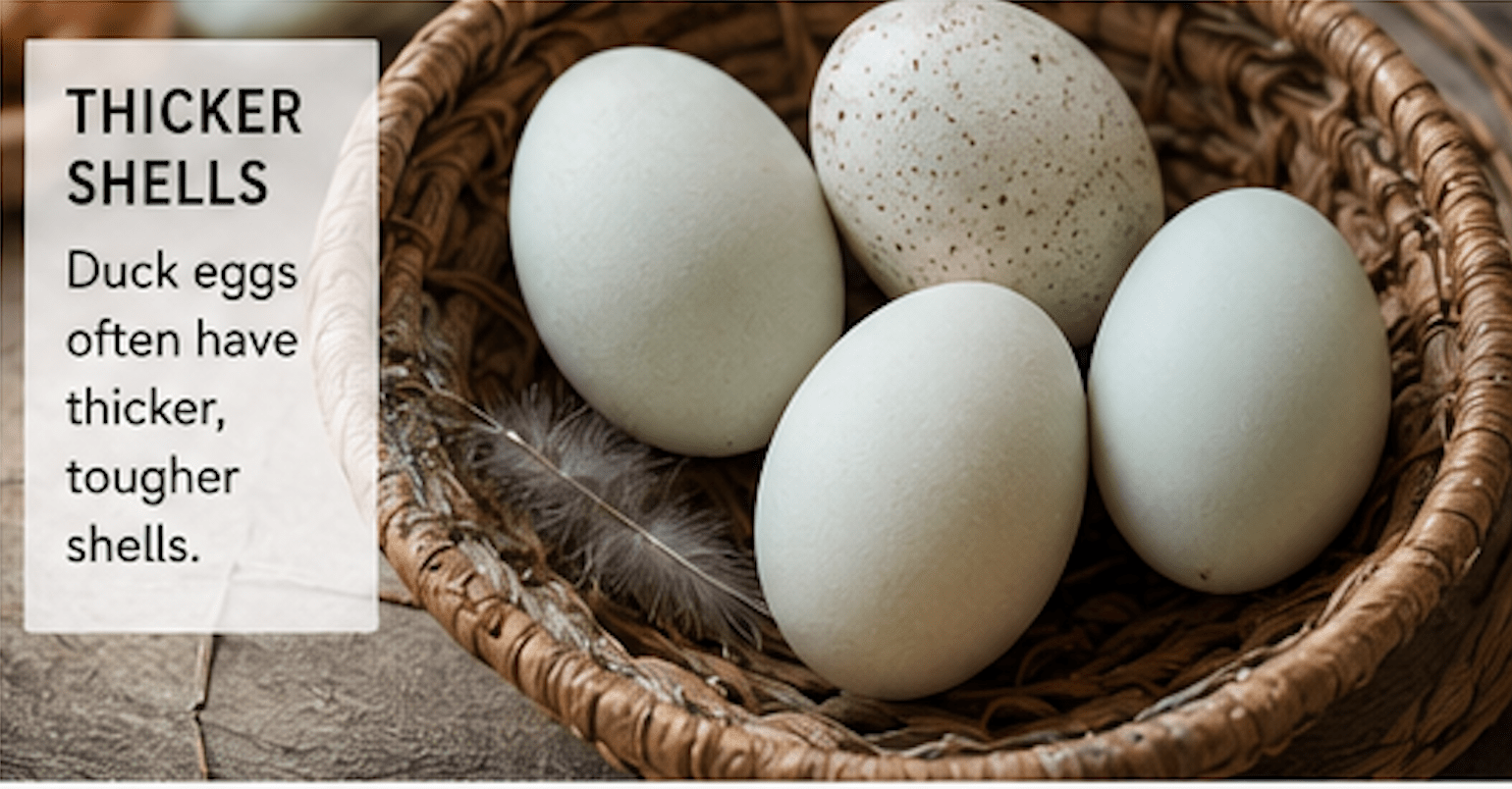
Duck eggs commonly have thicker, tougher shells than chicken eggs.
That can be handy because the sturdy shell offers the egg a little more protection. It can also be surprising the first time you try cracking one.
Give it a confident tap.
A hesitant little chicken-egg tap may leave you standing there wondering whether the duck has produced an egg or a small piece of pottery.
Shell color depends on breed, just as it does with chickens. Duck eggs may be white, cream, pale green, blue-green, or other shades.
And just like brown versus white chicken eggs, shell color isn't a reliable indication of nutritional quality or flavor.
Duck Egg Yolks Are Especially Rich
One of my favorite differences is the yolk.
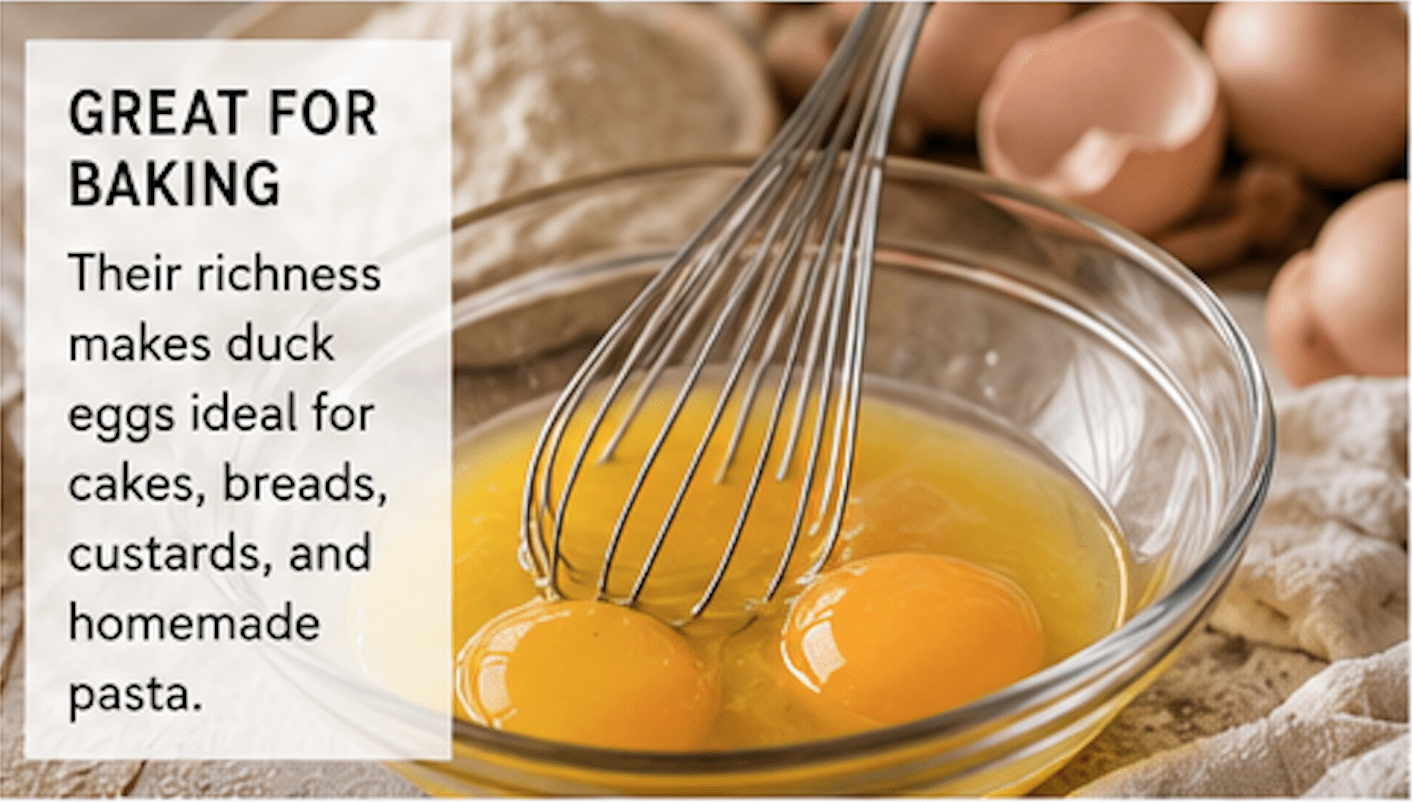
Duck eggs generally have a larger yolk relative to their size, giving cooked eggs a rich texture and making them particularly interesting for recipes that rely heavily on yolks.
Think:
custards, homemade noodles, enriched breads, cakes, pastries, and creamy desserts.
If you're the person who considers the yolk the best part of a fried egg, duck eggs may win you over pretty quickly.
Are Duck Eggs Better for Baking?
This is where duck eggs have developed quite a reputation.
Many home bakers love them.
The differences in the proportions and composition of the yolks and whites can affect the richness, structure, and texture of baked goods. In the right recipe, duck eggs can contribute to wonderfully rich cakes, breads, pastries, and other treats.
They're especially fun to experiment with in:
Pound Cake
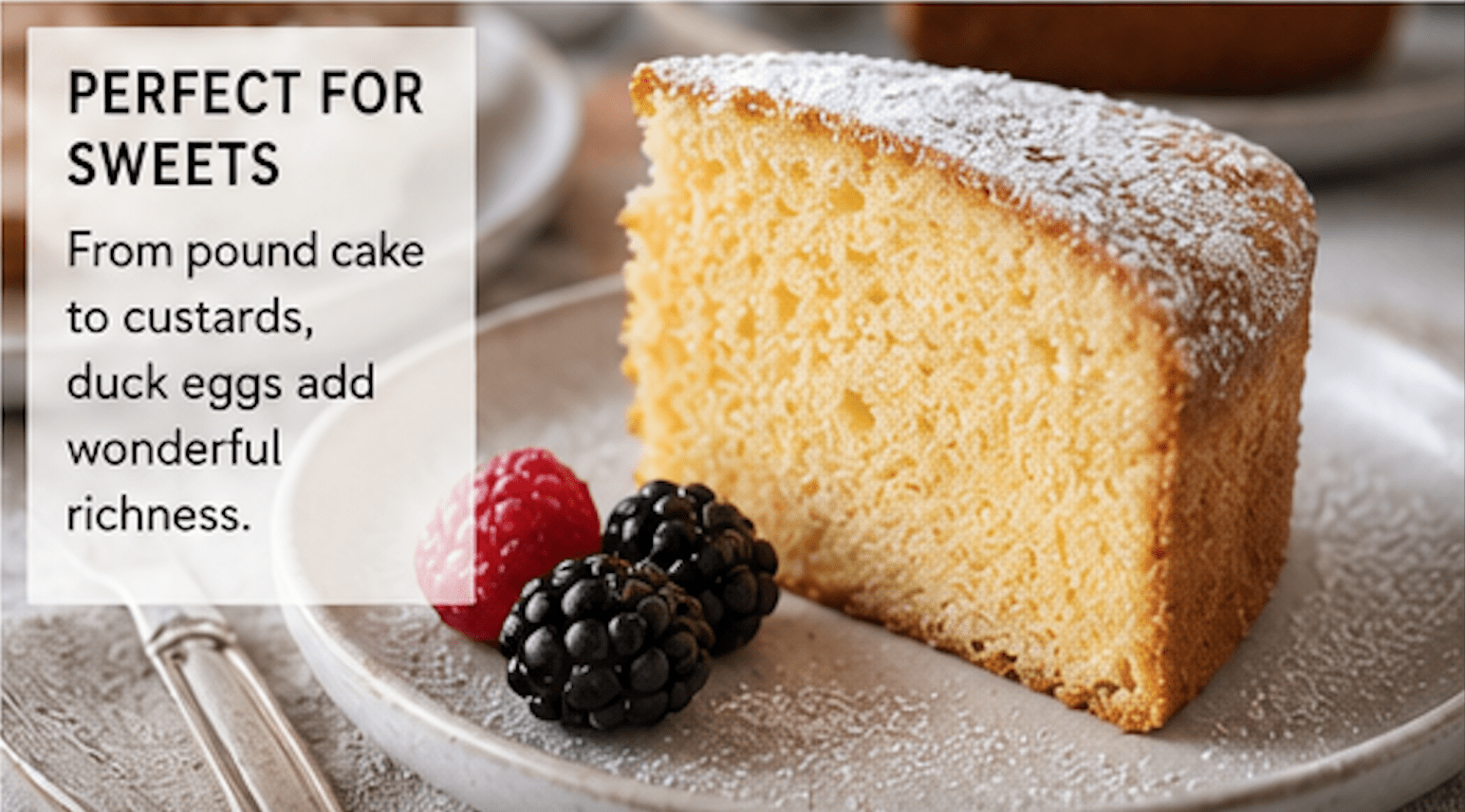
The richness of duck eggs is right at home in a buttery pound cake.
Homemade Pasta
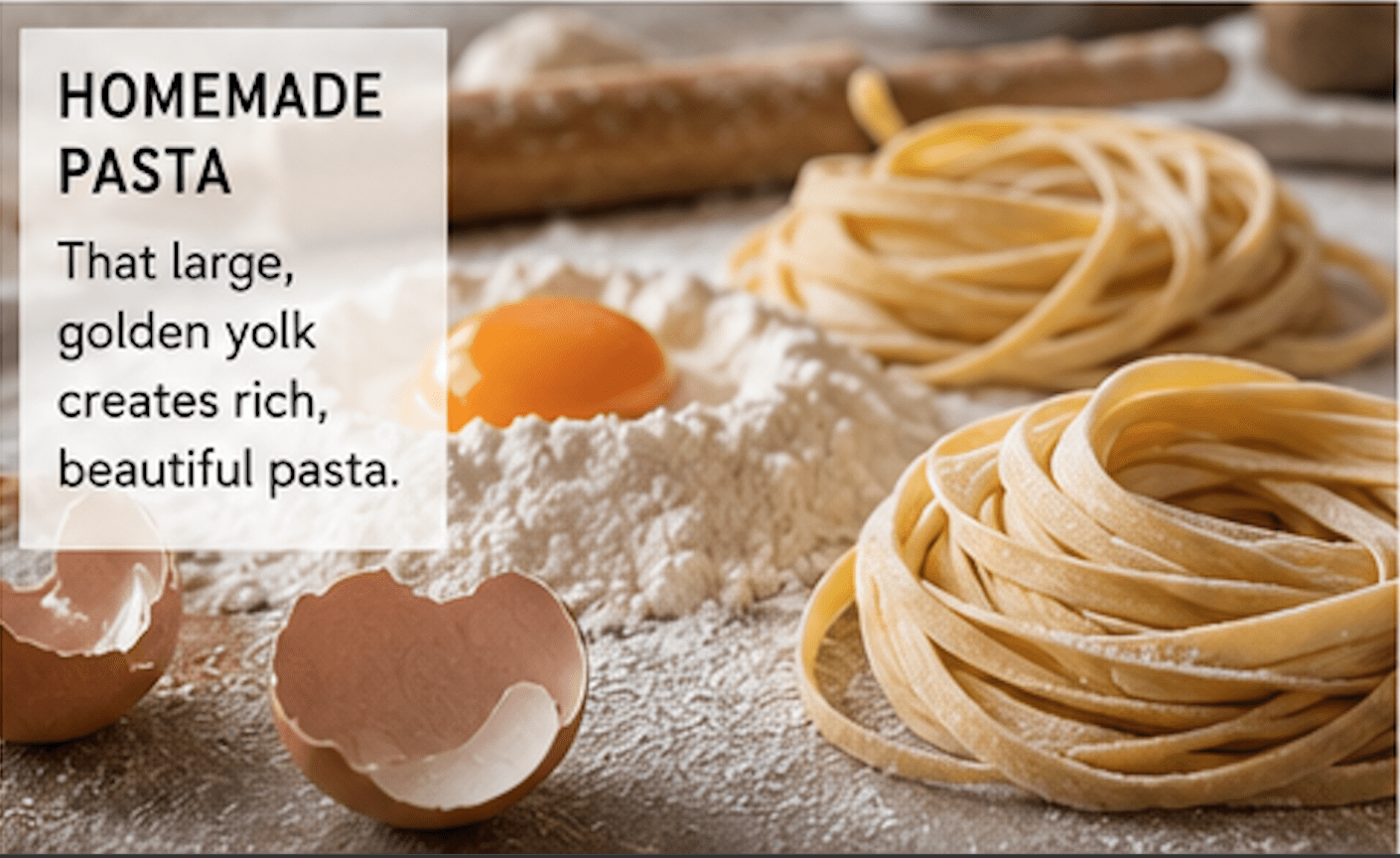
That beautiful large yolk makes duck eggs a natural choice for rich homemade noodles and pasta.
Brioche and Enriched Breads
Recipes containing plenty of eggs and butter are a great place to experiment.
Brownies
If your philosophy regarding brownies is that too rich isn't really a thing, you know what to do.
Custards
Custard-based desserts make wonderful use of those generous yolks.
That doesn't mean you should automatically substitute one duck egg for one chicken egg in every baking recipe.
Because duck eggs can be considerably larger, substituting them one-for-one may change the amount of liquid and egg protein in your recipe.
For forgiving farmhouse recipes, you can experiment. For precise baking, weighing the egg without the shell is the best approach.
Duck Eggs vs. Chicken Eggs for Cooking
For ordinary cooking, either one works beautifully.
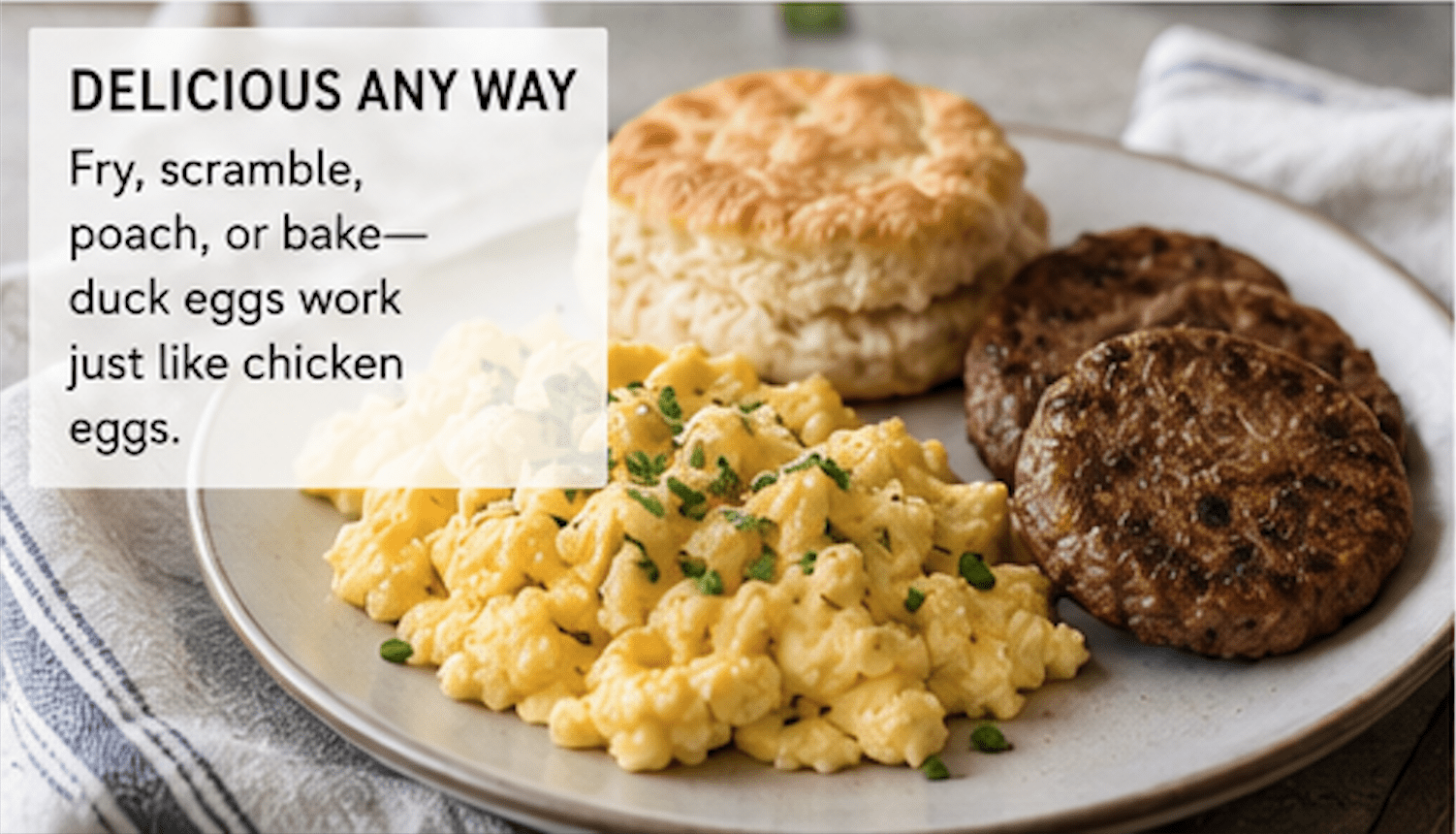
You can fry, scramble, poach, bake, or hard-cook duck eggs much the same way you would chicken eggs.
Duck eggs are particularly good when the egg itself is the star of the meal.
Try a fried duck egg with:
buttermilk biscuits + sausage + skillet potatoes + hot coffee.
That's not breakfast.
That's motivation.
Chicken eggs, however, remain my everyday workhorses. They're familiar, plentiful, versatile, and perfectly suited for everything from breakfast casseroles to meatloaf.
There's no need to choose sides.
Around a homestead, there's plenty of room in the egg basket for everybody.
Are Duck Eggs More Nutritious Than Chicken Eggs?
Duck eggs and chicken eggs are both nutrient-dense foods containing high-quality protein along with fats, vitamins, minerals, and other nutrients.
Because duck eggs are generally larger and contain proportionally more yolk, a whole duck egg will typically provide more calories, fat, protein, and cholesterol than a typical large chicken egg.
But size matters when making comparisons.
Comparing one large duck egg with one large chicken egg isn't necessarily an apples-to-apples comparison when the duck egg weighs considerably more.
For most of us, the practical takeaway is simple:
Both duck and chicken eggs can be nutritious foods. Duck eggs are generally larger and richer, so portion size matters.
If you're following a medically prescribed diet or need to monitor cholesterol, protein, calories, or another nutrient closely, use nutrition information for the actual egg size you're eating rather than relying on a simple duck-versus-chicken comparison.
Can You Eat Duck Eggs If You're Allergic to Chicken Eggs?
Don't assume that duck eggs are automatically a safe substitute for someone with a chicken-egg allergy.
The proteins aren't identical, but cross-reactivity can occur, and reactions can potentially be serious.
Anyone with an egg allergy should talk with an appropriate healthcare professional before experimenting with eggs from another bird species.
That's one kitchen experiment that isn't worth guessing about.
Do Duck Eggs Last Longer?
You'll sometimes hear that duck eggs automatically stay fresh longer because their shells are thicker.
I wouldn't use shell thickness as your food-safety plan.
Fresh eggs from your own birds should be collected frequently, kept clean, handled properly, and stored according to appropriate food-safety recommendations.
And remember that eggs can carry harmful bacteria even when they look perfectly normal.
When serving young children, older adults, pregnant people, or anyone with a weakened immune system, it's particularly important to follow safe egg-handling and cooking practices.
Are Ducks Better Layers Than Chickens?
This depends enormously on the breed.
Some duck breeds are excellent layers and can produce impressive numbers of eggs. Other ducks lay much less frequently.
The same is true for chickens.
Production can be influenced by:
- breed
- age
- daylight
- season
- nutrition
- health
- stress
- molting
- housing and management
So I wouldn't choose ducks solely because someone told you they'll give you more eggs.
Choose birds that fit your property, climate, setup, and reasons for keeping them.
And perhaps ask yourself one additional question:
How do you feel about mud?
Because ducks have never met a perfectly clean container of water they couldn't improve upon.
Keeping Ducks and Chickens for Eggs
If you have enough space and the right setup, keeping both can give you the best of both worlds.
Chicken eggs are wonderful everyday kitchen eggs. Duck eggs give you those beautiful large yolks and extra richness for special breakfasts and baking.
The birds themselves are very different, though.
Ducks need a setup that accommodates their love of water and their talent for turning damp ground into something resembling a small agricultural swamp.
Chickens generally prefer things considerably drier.
If you're considering adding ducks to an existing flock, don't base the decision on egg size alone. Research housing, water management, predator protection, feed, climate needs, and breed characteristics first.
The eggs are the delicious part.
The muddy water bucket is the fine print.
Which Is Better: Duck Eggs or Chicken Eggs?
Neither one wins every category.
If you want a familiar, versatile everyday egg, chicken eggs are hard to beat.
If you enjoy a larger, richer egg—especially for fried breakfasts, baking, custards, pasta, and enriched breads—duck eggs are absolutely worth trying.
And if you're lucky enough to walk outside in the morning and collect both?
Use both.
That's one of the nicest things about cooking from a homestead. The kitchen changes with whatever the garden, pantry, or barnyard happens to give you that day.
Some mornings that's a basket of chicken eggs.
Some mornings there's a great big duck egg sitting in the nest.
Either way, I'm putting the coffee on.
Frequently Asked Questions About Duck Eggs
Can you eat duck eggs just like chicken eggs?
Yes. Duck eggs can generally be cooked using the same methods as chicken eggs, including frying, scrambling, poaching, baking, and hard cooking.
Do duck eggs taste different?
They usually taste similar to chicken eggs but tend to have a richer, fuller flavor.
Why are duck egg yolks so big?
Duck eggs generally have a larger yolk in proportion to the egg, contributing to their rich flavor and texture.
Can I substitute duck eggs for chicken eggs in baking?
Often, yes, but not necessarily one-for-one because duck eggs can be much larger. For recipes requiring precision, weighing the egg is more reliable.
Are duck eggs good for cakes?
Yes. Their richness makes duck eggs particularly popular for cakes and other baked goods.
Why are duck egg shells harder to crack?
Duck eggs commonly have thicker, tougher shells than chicken eggs.
Which eggs are better for breakfast?
That's personal preference. Chicken eggs have a milder, familiar flavor, while duck eggs offer a larger yolk and richer eating experience.


Recent Comments